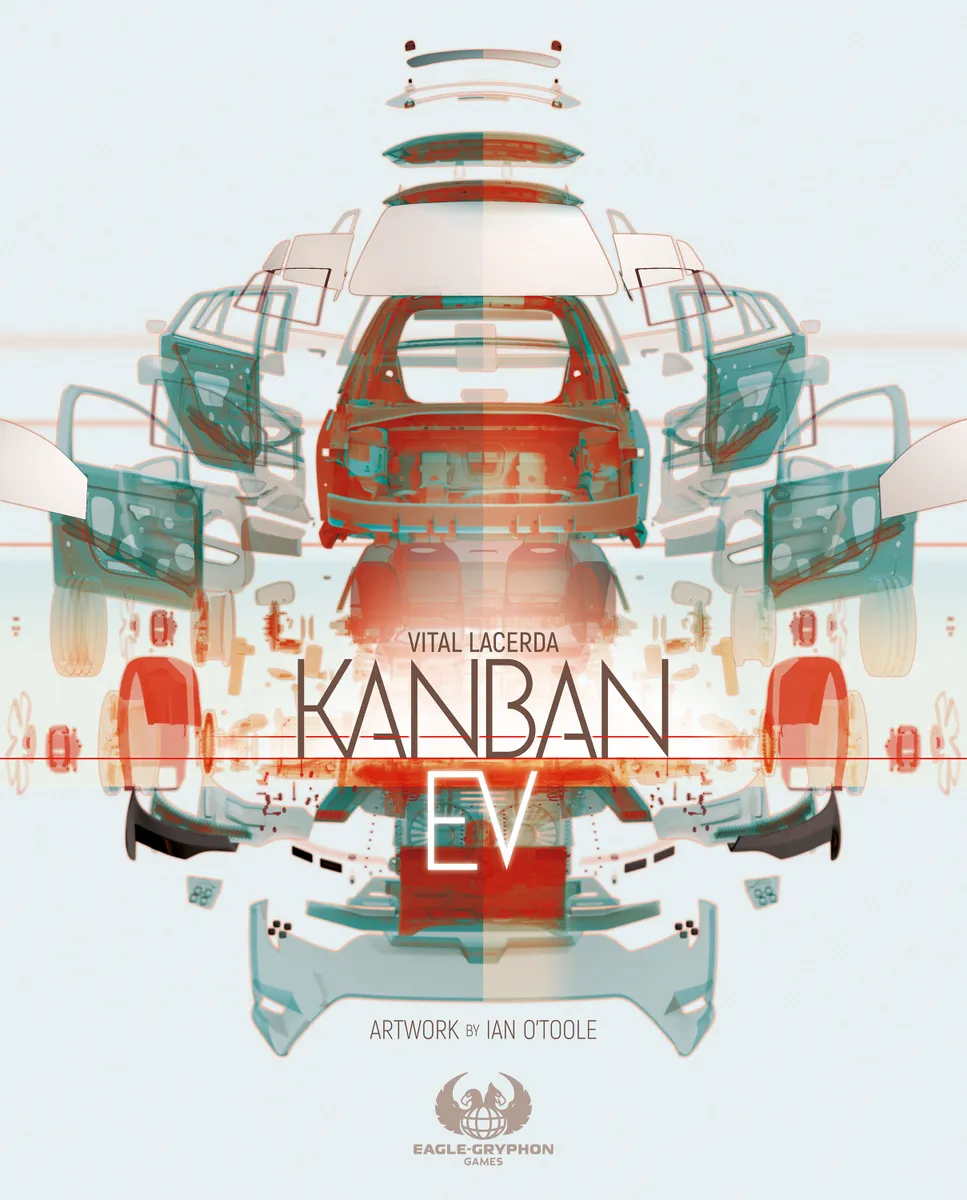
Welcome to this week’s review! Today I’m going to look at a game that’s been in the collection since the early days. I just picked up the deluxe edition for it, so I thought it would be a good time to revisit the game. So, without further ado, let’s jump into it.
Kanban EV
- Designer: Vital Lacerda
- Publisher: Eagle-Gryphon Games
- Complexity: Heavy
- Time: 60-180 Minutes
- Players: 1-4
- Main Mechanisms: Worker Placement
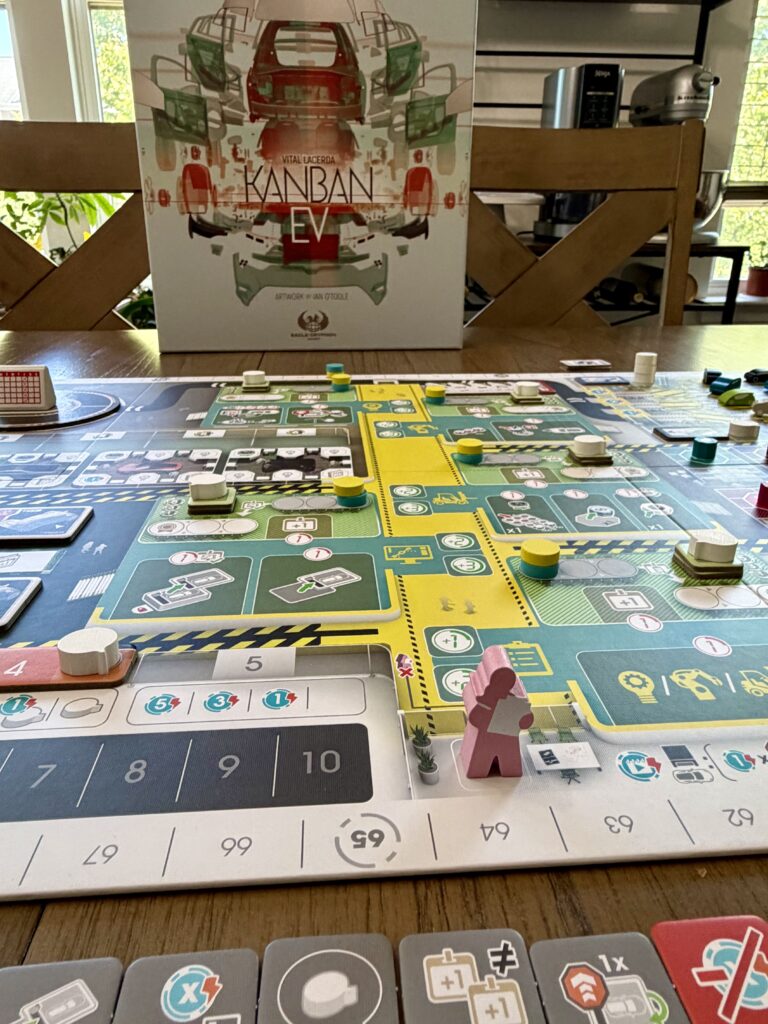
Kanban: Driver’s Edition/Automotive Revolution was a game that I picked up not long after its original release in 2014. I’ll be honest though – Kanban has taken me awhile to come around on. I’m not super knowledgeable about cars, but the theme about working in an automotive factory was what initially caught my attention. And while I own and play a lot of heavy euro games, for some reason this one failed to click for me initially. It also didn’t help that the game was challenging to get to the table often because of the long setup and number of rules. All of this combined, Kanban has consistently been my third favorite Vital Lacerda-designed game after The Gallerist and Vinhos. However, with more plays, I’ve come to appreciate the game more, and I recently acquired the deluxe version of the game – Kanban EV.
If you’re not familiar, from a rules perspective, Kanban EV is roughly 95% the same game as the Driver’s/Automative editions, except with upgraded components and gorgeous artwork from Ian O’Toole to bring it up to the quality of that of Lacerda’s other Eagle-Gryphon Games. I’ll admit, at least an ounce of the decision to upgrade to the EV edition may have been because my original version of Kanban looked out of place alongside the “deluxified” The Gallerist and Vinhos on my shelf. So, with the new edition of Kanban in hand and it being some time since the game last hit the table, I was extremely eager to revisit the it to see if my feelings on the game had changed.
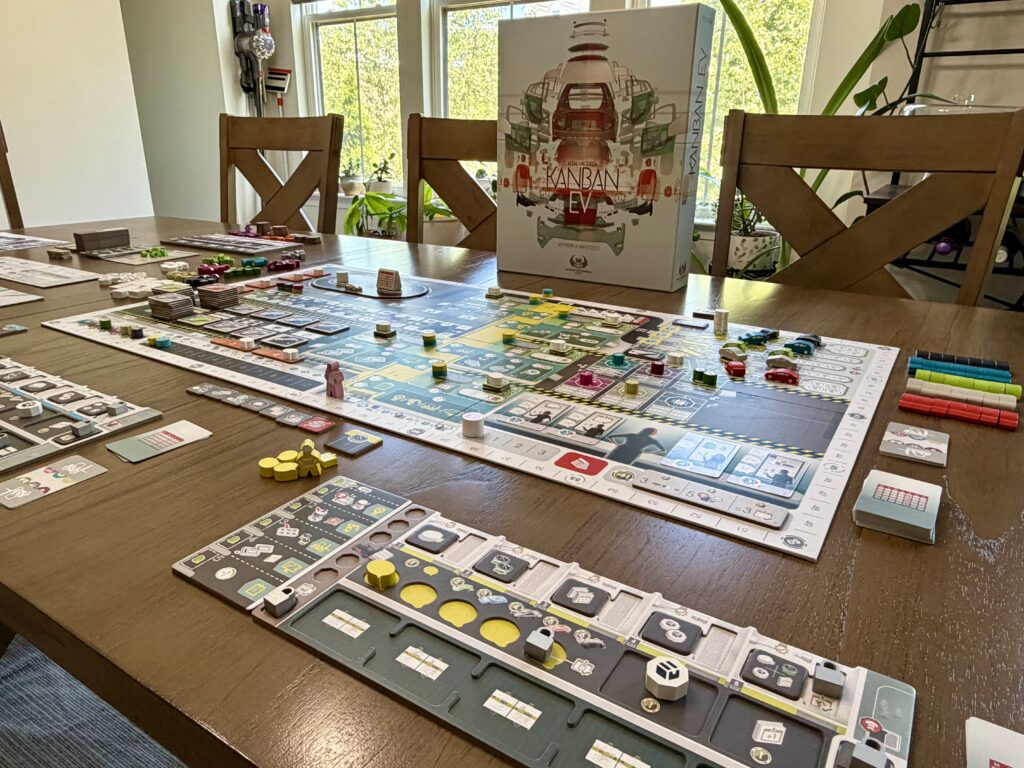
First off, Kanban is incredibly thematic. That’s partly why I rate The Gallerist and Vinhos so highly, as Lacerda’s best designs feel grounded thematically, with the mechanisms built off of the theme rather than as an afterthought. In the game, players take on the role of a new employee trying to make their mark by being the most efficient to design, upgrade, and build cars at the automotive factory.
The game is broken up into five interconnected departments that act as their own mini-game of sorts, and each turn, players work in one of the five departments: Design, Logistics, Assembly, R&D, and Administration. For example, car designs are acquired in Design, which can later be used in R&D to claim and upgrade cars. The game is very much an efficiency puzzle where you have to maximize your limited actions and resources, and with each successive play, I’ve come to appreciate this part of the game much more.
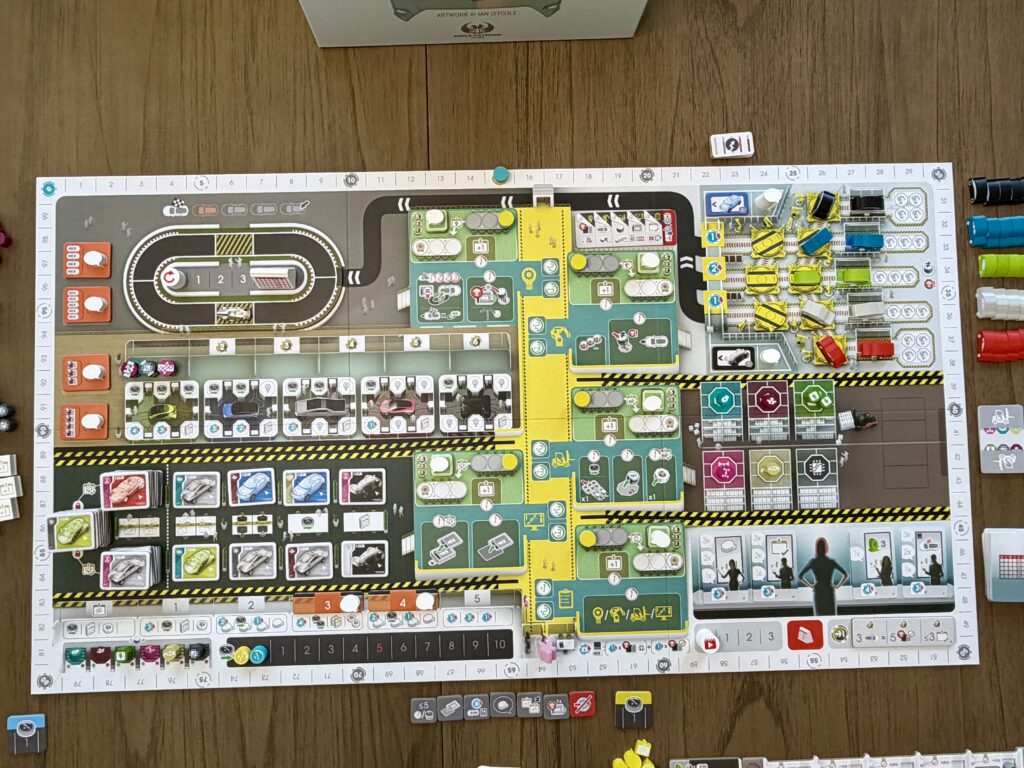
Another unique mechanism is the introduction of the boss – Sandra. In the game, Sandra is the factory manager, tasked with judging the players’ performance. Each round, Sandra visits one of the five departments, and the player(s) with the least training in that department gets evaluated by her. Have too few of something, like cars in your garage, and you lose victory points that scale based on how little banked time you have. Overall, I really enjoy this mechanism because it adds a lot of extra decision making on your turn to try to stay one step ahead of Sandra’s attention, and you’re constantly forced to balance both your goals with that of Sandra’s.
Another interesting mechanism are the in-game meetings. At certain points in the game, a meeting will occur where players can score both public and private objectives. However, the interesting twist is that each time a player scores an objective, the next player’s maximum number of points they can earn from that objective is lowered. This is also incredibly thematic as it simulates the more times Sandra hears the same goal, the less she’s impressed. Players can also score off other players private objectives, and the public objectives for the next meeting are seeded by the players forcing you to plan multiple meetings ahead.
This leads me into my next positive about the game; the game offers a lot of opportunities for both short-term and long-term planning. For example, in the short-term, it’s satisfying to gradually build, upgrade, and acquire cars, while long-term planning can be for meetings and end-game objectives. As a player, you’re constantly having to juggle both what you immediately need to get done while trying to set yourself up for maximum points in the future. The leads to the game feeling both tactical and strategic at the same time, with each game feeling different from the last.
I’ve talked at length about the mechanisms, but it’s equally worth mentioning the excellent production value in the EV edition. Look, I know the price difference between the two versions is substantial, that is if you can still find a copy of the original version, but I’m personally a huge fan of the changes. I never had too much trouble understanding the borders on each of the original departments, but overall, the new version is clearer to comprehend and looks great on the table. The included insert is also well-designed and will make the game easier to get it back to the table more often.
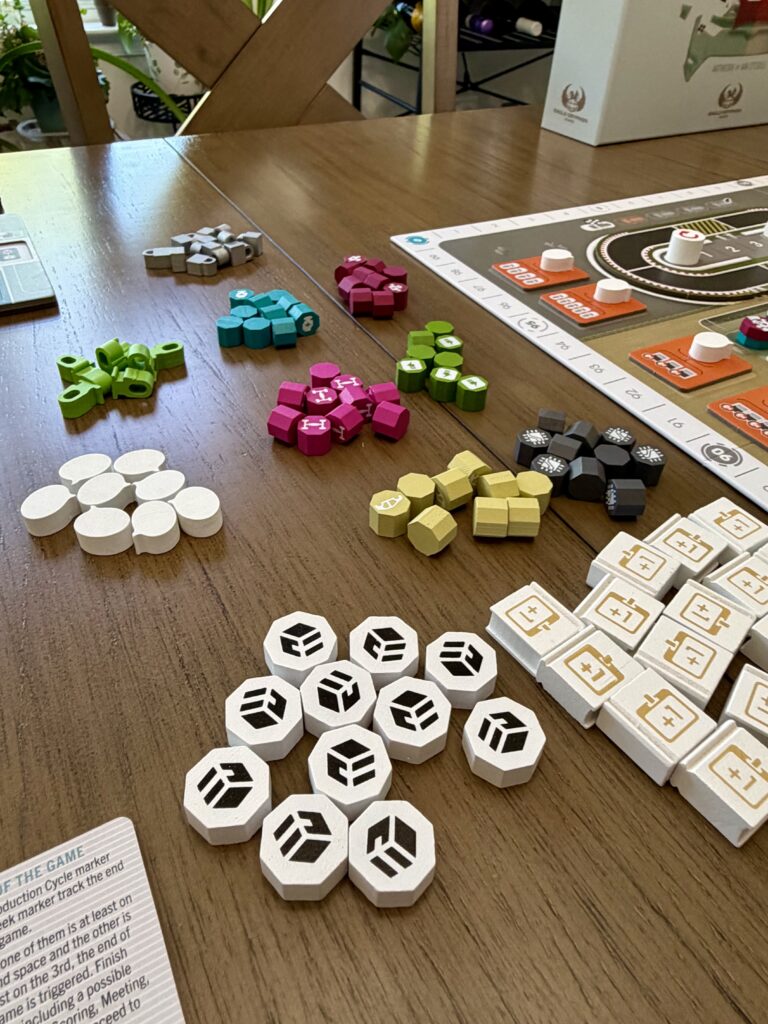
I also picked up the Upgrade Pack which comes with a couple of mini-expansions. The first introduces SpeedCharger abilities that can be acquired in the Administration department. I wouldn’t call this mini-expansion essential, but I’ll likely throw it in to every game because it makes the Administration department more worthwhile to pursue. The second mini-expansion adds special garage tiles that can be swapped out with the traditional fifth garage bonus. This one I could take or leave, but I appreciate the extra variety.
I will say, the one slight negative I still have with the game is that Sandra seems to be less impactful as the game progresses. While one of the slight tweaks to the rules was to have Sandra cause the player(s) with the least training to lose at least one victory point, as long as you’re always staying around five banked time, the penalties for Sandra are very minor. Thematically I guess this makes sense as over time you as employees become more skilled, so Sandra doesn’t penalize you as harshly, but from a gameplay perspective, I feel that paying attention to where Sandra is at the beginning of the game is incredibly important and then becomes less so as the game goes on.
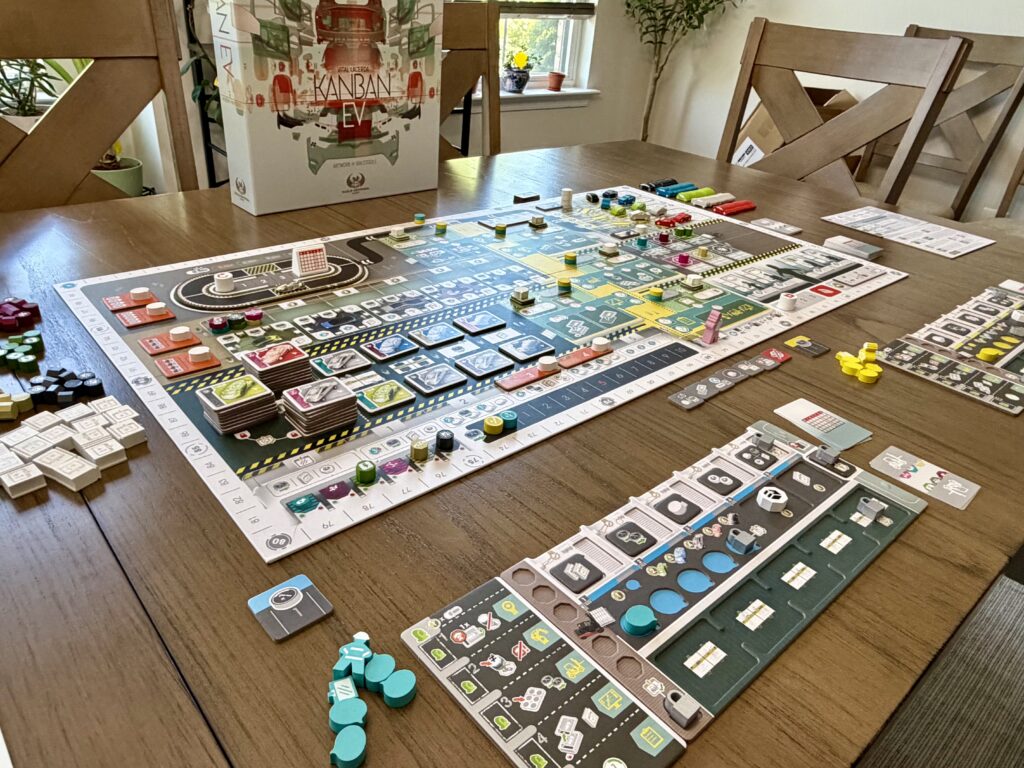
All that said, even without the new edition, Kanban is a game that has gradually grown on me. I’m not sure if that’s a reflection on the changes in my gaming tastes or more so that I’ve come to appreciate the design more. Overall, I’m curious to see where Kanban EV lands in my rankings later this year because the new edition is making a strong case to be right up there with The Gallerist and Vinhos.
With that, I’ll wrap up this week’s review! If you’ve played Kanban, I’d love to hear your thoughts on the game, and what your favorite Vital Lacerda games are. Happy gaming!
If you liked this post and want to be notified when new content is released, then follow me on Instagram @themeepledigest.