Welcome to this week’s review! This time I’m revisiting my favorite tile-laying game. So, without further ado, let’s jump into it.
Castles of Mad King Ludwig
- Designer: Ted Alspach
- Publisher: Bézier Games
- Complexity: Medium
- Time: 90 Minutes
- Players: 1-4
- Main Mechanisms: Tile Laying
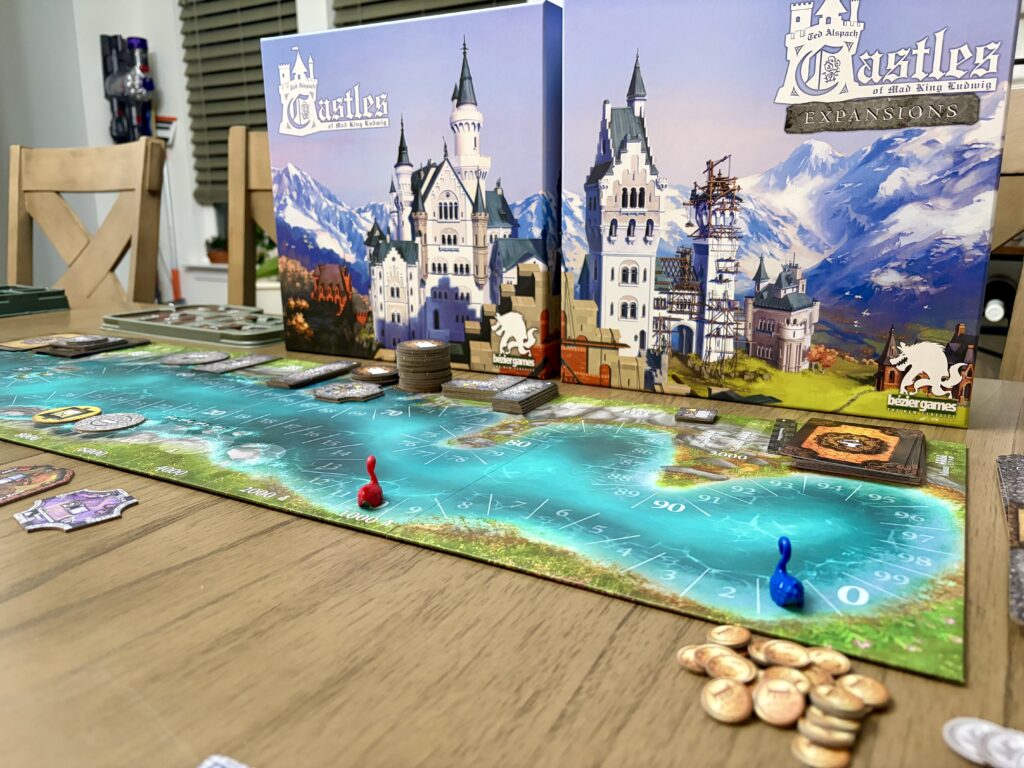
I added Castles of Mad King Ludwig to my collection not long after its original release in 2014, and it has remained a favorite of mine since. I even recently picked up the second edition of the game, along with the expansions, which were new to me. So, after getting it back to the table for a bunch of plays, I wanted to find out if my feelings on the game have changed.
The short answer to that question is no – I still love it! First off, the wacky theme of building out a castle for a “mad king” perfectly fits with the gameplay. It’s so fun to look how disjointed and wild my castle layout looks at the end of the game. Why not put the mold room next to the grand bedchamber? And every castle needs a bottomless pit next to their dungeon, of course. Part of the fun for me is seeing what kind of crazy castles everyone puts together.
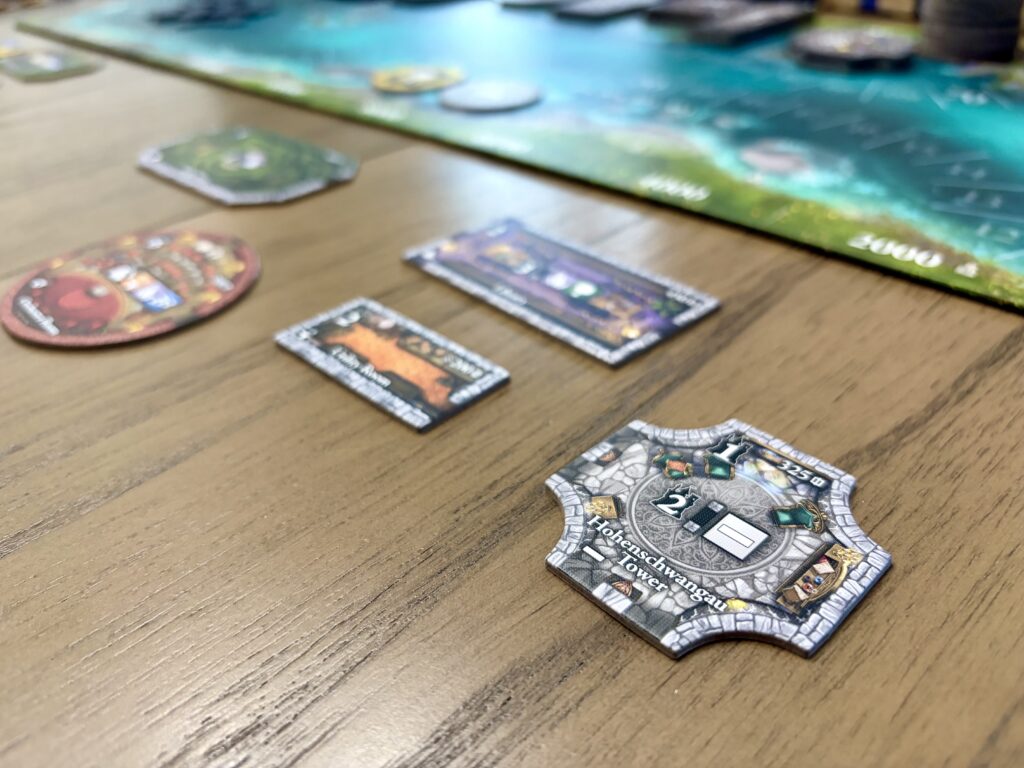
However, the theme alone is not what makes Castles of Mad King Ludwig stand out. I like tile-laying games that have an extra layer of decision making beyond just placing tiles. Part of the reason why I bounced off Cascadia after my first play of it was that without much player interaction, the tile-placement felt rather uninspiring, and there weren’t enough moving parts to keep me interested. And while I recently wrote a very positive review of Harmonies, that game is also largely multiplayer solitaire. The only other tile-laying game that I’d put in a similar tier to Castles is Isle of Skye, which also has a dynamic tile-pricing mechanism.
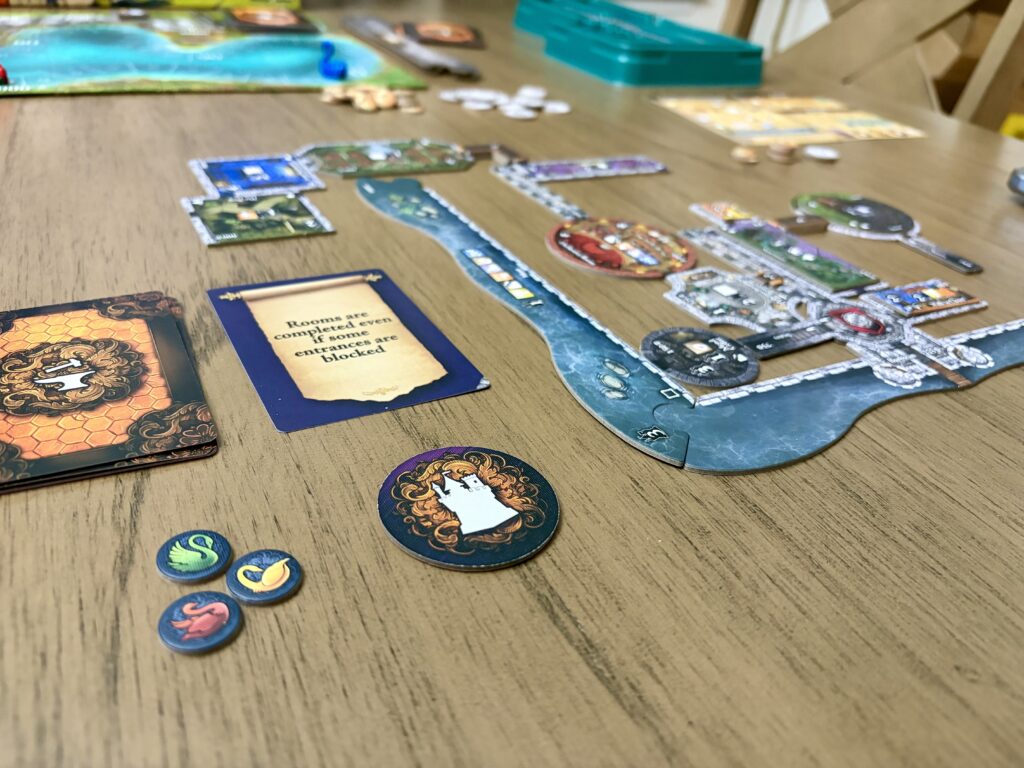
In Castles of Mad King Ludwig, each round someone acts as the “Master Builder”, who is responsible for setting the price of each of the available rooms that round. When another player purchases a room that round, their money goes to the “Master Builder”. This tile-pricing mechanism is one of my favorite parts about the game. There are always multiple things to consider when pricing rooms, such as the public objectives, private objectives, room adjacency bonuses, empty room stacks, and more. As the “Master Builder”, you also have to consider how cheap/expensive to make the most desirable rooms to entice other players to spend more money, which will ultimately flow into your cash reserve. This mechanism, combined with Suburbia feeling much more punishing, is why I vastly prefer Castles of Mad King Ludwig to that game.
I also enjoy the combination of both public and private objectives. Each game there are two to four public objectives available based on the player count, and the players who best fulfill the objectives receive the most points. For example, one objective is to have the most of a certain type or size of room, and since they change from game to game, it keeps each successive play exciting. In addition to these public objectives, each player also receives at least two private objectives that operative similarly, except for only that player. For example, every food room could score a certain number of points. These are just one factor in determining what price to set each room. Sometimes you’re able to deduce someone’s else’s private objectives based on their pattern of rooms, which adds another layer of interaction. For example, if one player keeps purchasing all of the food rooms, maybe you should price those rooms a bit higher.
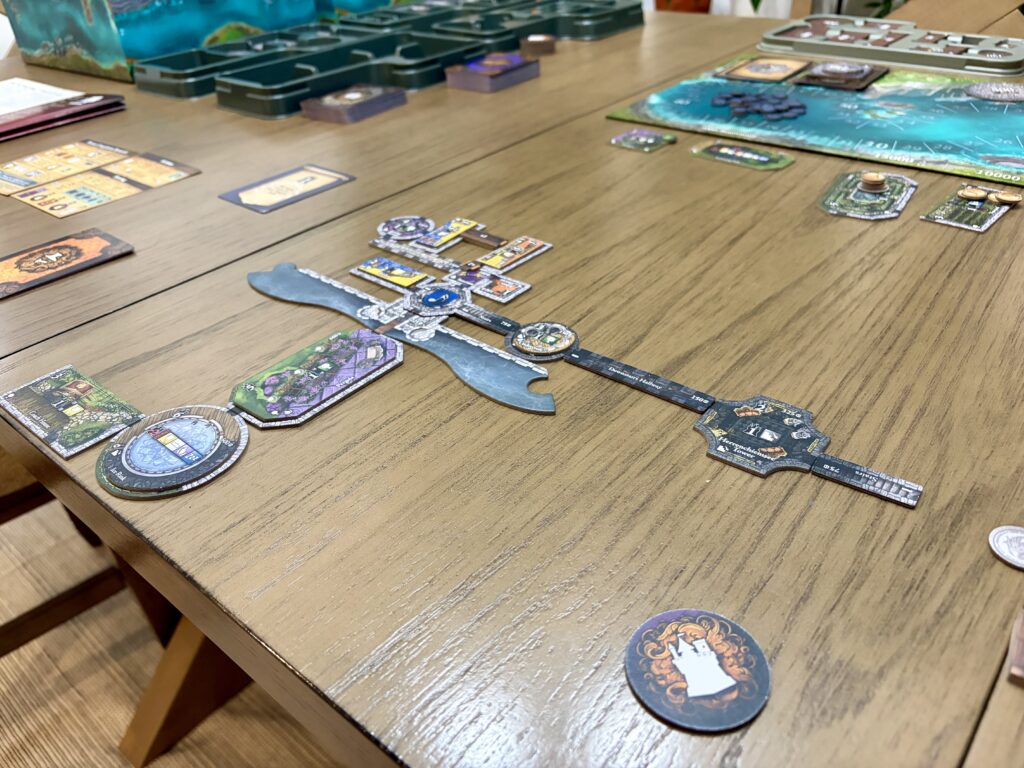
The expansions also add a ton of variety for players like me who have played the game a ton. The expansions box, released alongside the second edition of the game, comes with six modular expansions, including 75 new rooms, additional King’s Favors and bonus cards, as well as the ability to play the game with up to five players. My favorite of the modules is the Royal Decree cards that add asymmetric player powers. And while the renovations module definitely adds more complexity, I enjoyed the extra room tiles, which added even more choices to consider. The second edition and expansions also come with trays to hold the room tiles and components that greatly speed up the setup and cleanup time.
The one caveat I have with the game is that while the room pricing is my favorite mechanism in the game, the game can quickly unravel if you’re playing with players who don’t understand how to correctly price rooms. For example, if one player continues to price rooms that match the public objectives really cheap, then the player to their left is likely going to do well. I’m still open to playing Castles of Mad King Ludwig with new players, as long as everyone at the table is okay with a bit of coaching on how to price rooms.
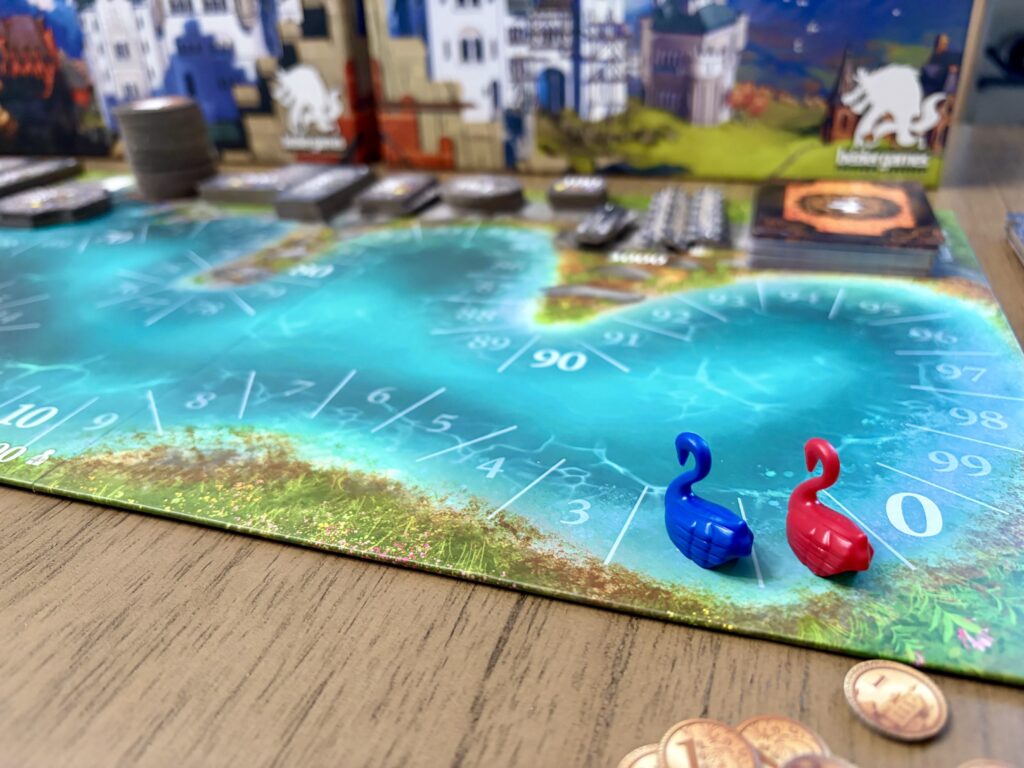
So, after many recent plays, I can still confidently say that Castles of Mad King Ludwig is still my favorite tile-laying game. I tend to struggle with spatial games, but the light and wacky theme of building out a “mad” castle combined with the tense room pricing mechanism keeps me coming back. If you’ve somehow yet to try the game, I definitely recommend it to players who like a bit of extra strategy to their tile-laying games.
With that, I’ll wrap up this week’s review! If you’ve played Castles of Mad King Ludgwig, what are your thoughts on the game, and what are your favorite tile-laying games? I’d love to hear your thoughts on any of the games I’ve mentioned or future content suggestions in the comments below. Happy gaming!
If you liked this post and want to be notified when new content is released, then follow me on Instagram @themeepledigest.