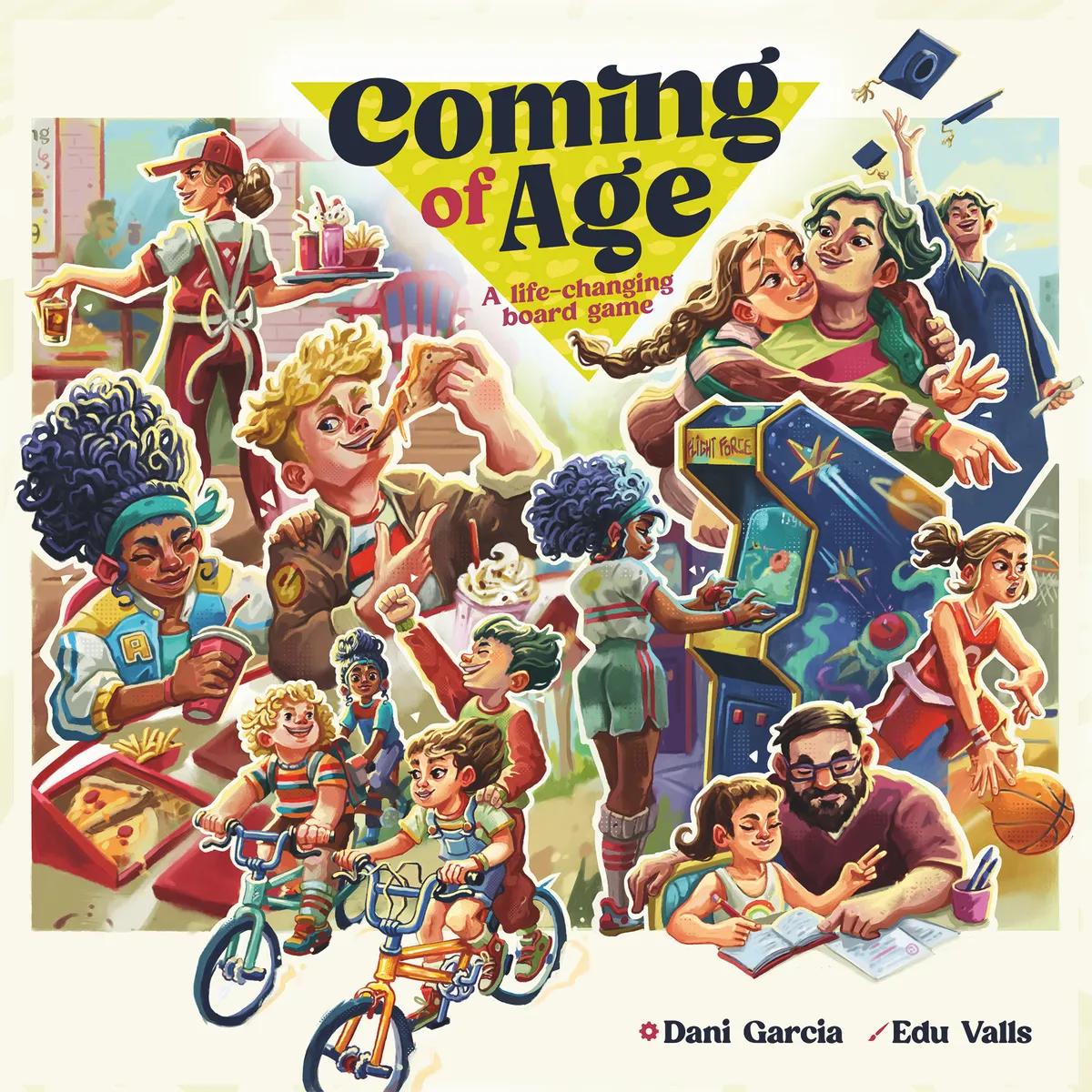
Welcome to this week’s review! This time I’m looking at a game with a unique theme about children growing up and the journey along the way. So, without further ado, let’s jump into it.
Disclosure: A review copy of this game was provided to The Meeple Digest in exchange for an honest, unbiased review. This review is not intended to be an endorsement.
Coming of Age
- Designer: Dani Garcia
- Publisher: Ludonova
- Complexity: Medium
- Time: 40-80 Minutes
- Players: 1-4
- Main Mechanisms: Dice Rolling/Worker Placement
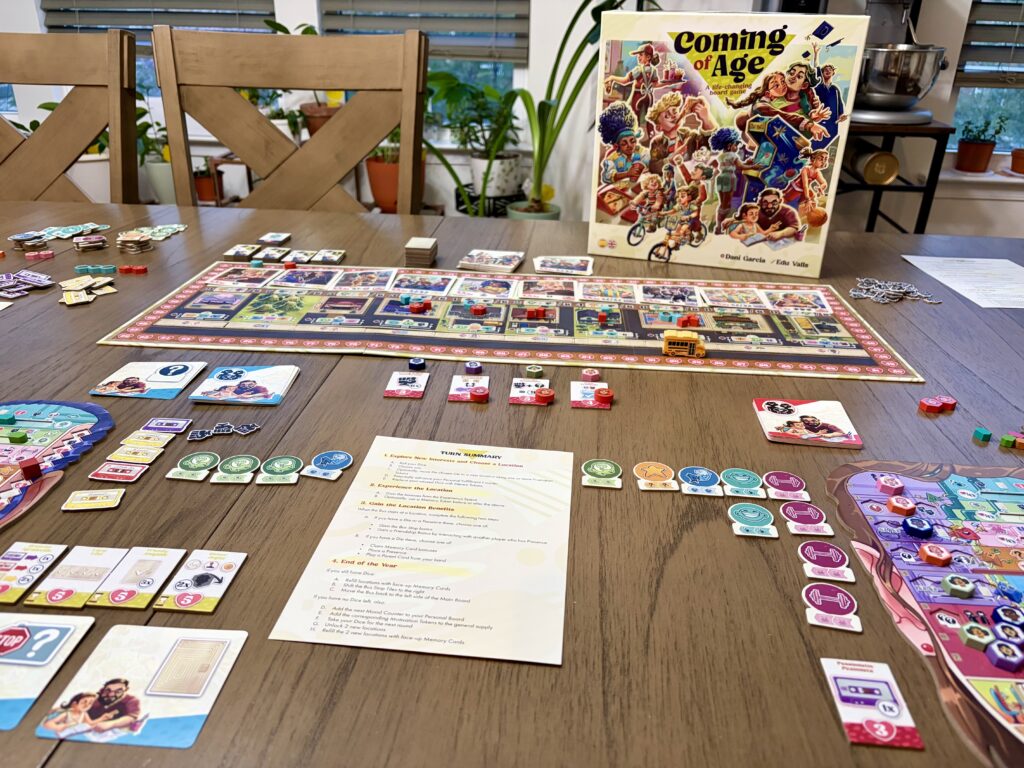
In Coming of Age, players take on the role of a child as they take on experiences and develop interests, while managing their ever-developing mood. The game takes place over nine rounds, and in each round, players roll dice, go to a matching location, adjust their player’s mood tokens accordingly with the location, and gain bonuses while attempting to complete their personal goals.
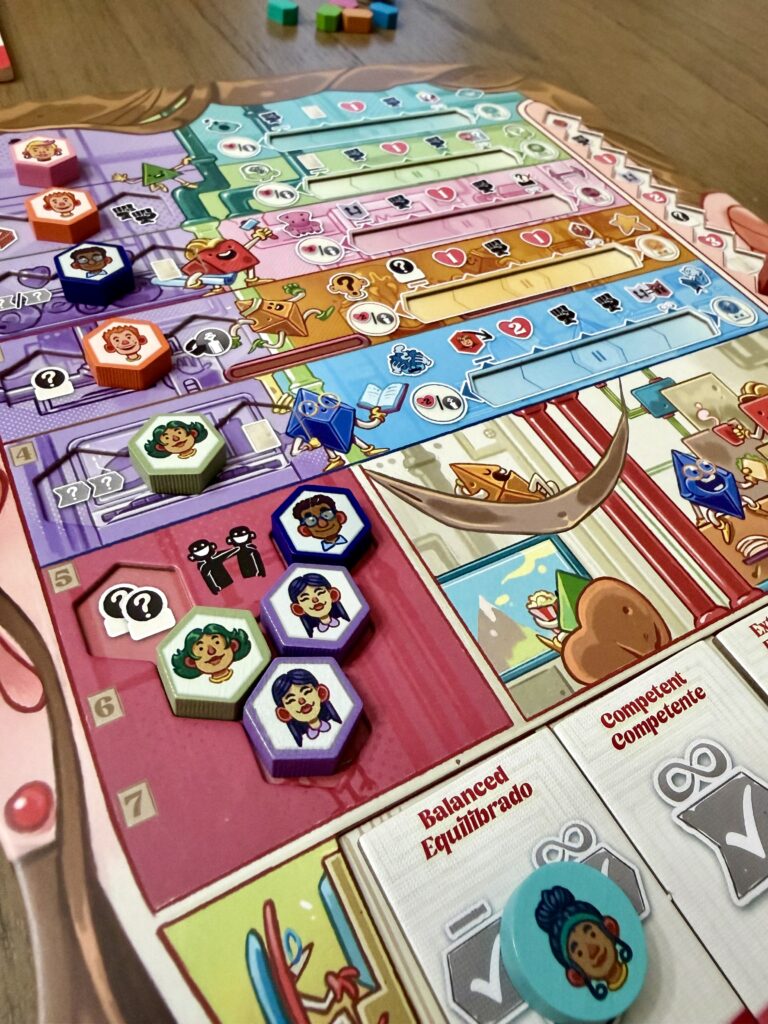
The game’s unique theme is what initially caught my interest. The game offers a compelling and thematic arc where at the beginning of the game, there are a limited number of locations available, and players only have to manage two mood tracks. However, as the game progresses, more locations and mood tracks unlock, introducing more bonuses and more tracks to juggle. I like how this thematically ties to the concept of players aging. In addition, each location impacts up to three mood tracks, which have thematic tie-ins as well. For example, the school increases the player’s learning and popularity, while making them bored. This creates a fun mini game where you have to juggle the five different mood tracks as moving higher up the tracks unlocks ongoing bonuses, while moving the token too far in the opposite direction can cause the player to gain frustration tokens and lose victory points.
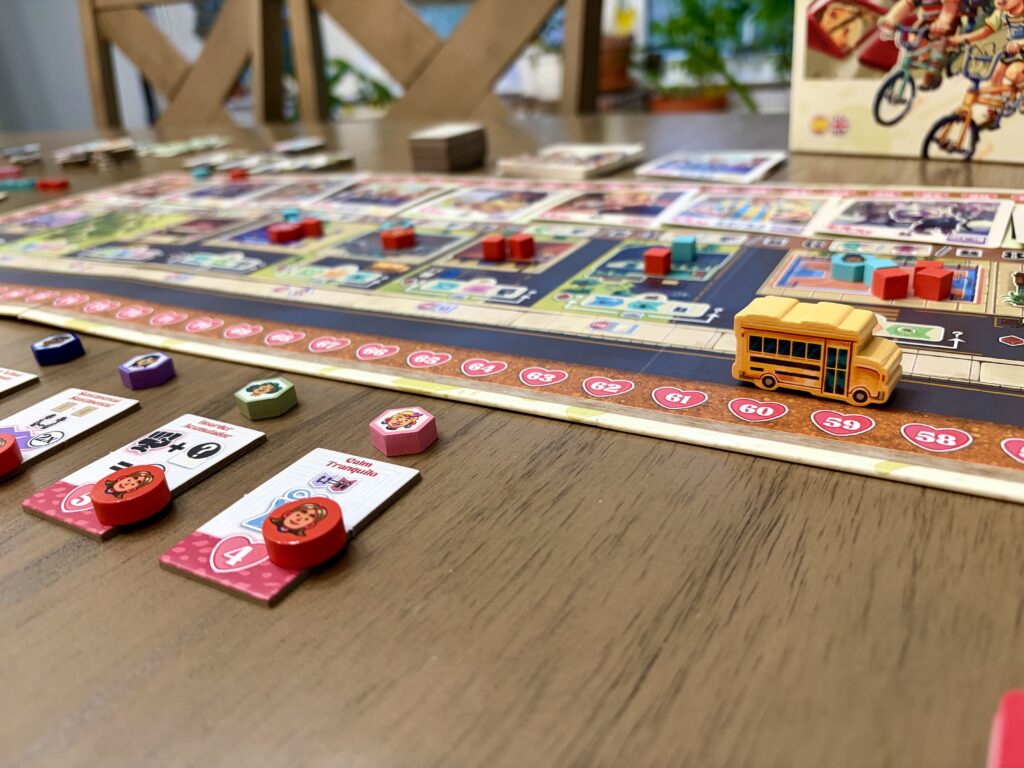
Another interesting mechanism is the game’s bus system. In each round, the bus token stops at every location and every player with a die or presence token at that location gets the bonus on the matching bus stop tile. This could involve gaining friendship with the matching character, which gains victory points and triggers more bonuses, or other bonuses like allowing you to move a mood counter. At the end of each round, the bus tiles shift one space, so it adds another element of decision making when deciding which location to visit. Players can also leave a presence token at a location they visit, thematically representing a gained hobby, allowing the player to gain the bus stop bonus without needing to have a die at that location in future rounds. I found leaving presence to be quite important early in the game to gain a lot of passive bonuses in later rounds.
It’s also worth mentioning that the overall production is quite solid. There are dual-layer player boards, and the main board has a cut-out that allows the bus stop tiles to easily slide while staying in place. Each player also four different types of dice, which gradually expand as more locations become available. And finally, the art and tokens are quite nice overall.
That said, I did have a few complaints with the production. First off, for a game that is relatively midweight in terms of complexity, the rulebook does not do a good job of clearly explaining the game. The rulebook feels like it goes out of its way to use language and terminology to help sell the theme, but in doing so, makes it difficult to remember what each term represents mechanically. For example, rather than using the term victory points, the rulebook refers to them as Vital Experience Points (VEP). There are also mood counters, personal fulfillment counters, mimic trait tokens, frustration tokens, memory tokens, motivation tokens, willpower tokens, interest tokens, parent and memory cards, and trait and goal tiles, and keeping track of all terms turned out to be surprisingly difficult in my first few games. After a couple of games, things started to click, but the rulebook could definitely be improved.
In addition, there are plenty of icons that are only explained in the player aid. However, it’s quite large and only one is included, so you’ll likely find yourself passing it around to the other players fairly frequently. This extends to the goal and trait tiles that are only explained in the back of the rulebook. There are four turn summaries that mostly do a good job of outlining the turn structure, but there are a couple of important rules that are left out. Having seen some great examples of recent player aids, I think the game could have easily expanding the individual turn summaries to include the iconography, as well as explain the goal tiles.
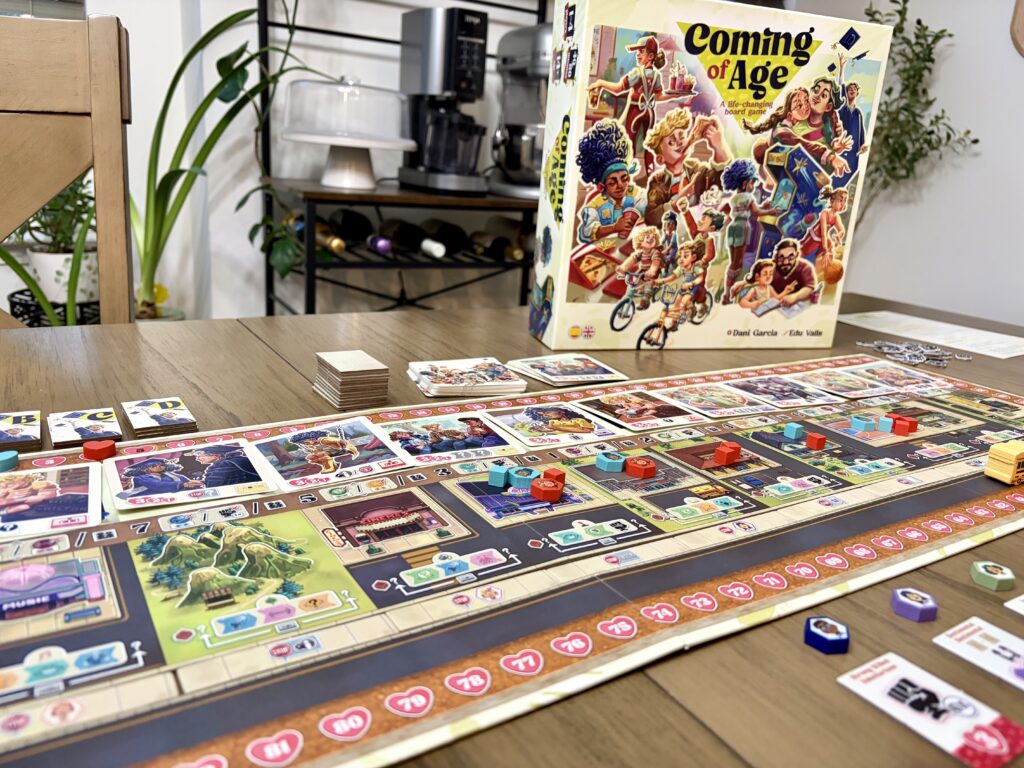
There are also quite a few colors going that will likely make the game challenging for anyone with a color vision deficiency. First off, each player has their own color. Next, each of the five mood tracks have a color. Then there are seven neutral character tokens, each with their own color. And finally, each of the three memory tokens have their own color. Most of these have icons to help differentiate, but overall, there are a lot of different shades of color throughout.
Another minor complaint – the memory cards reuse the same artwork on many of the cards, and I feel like this was a missed opportunity to inject some more of the theme into the game.
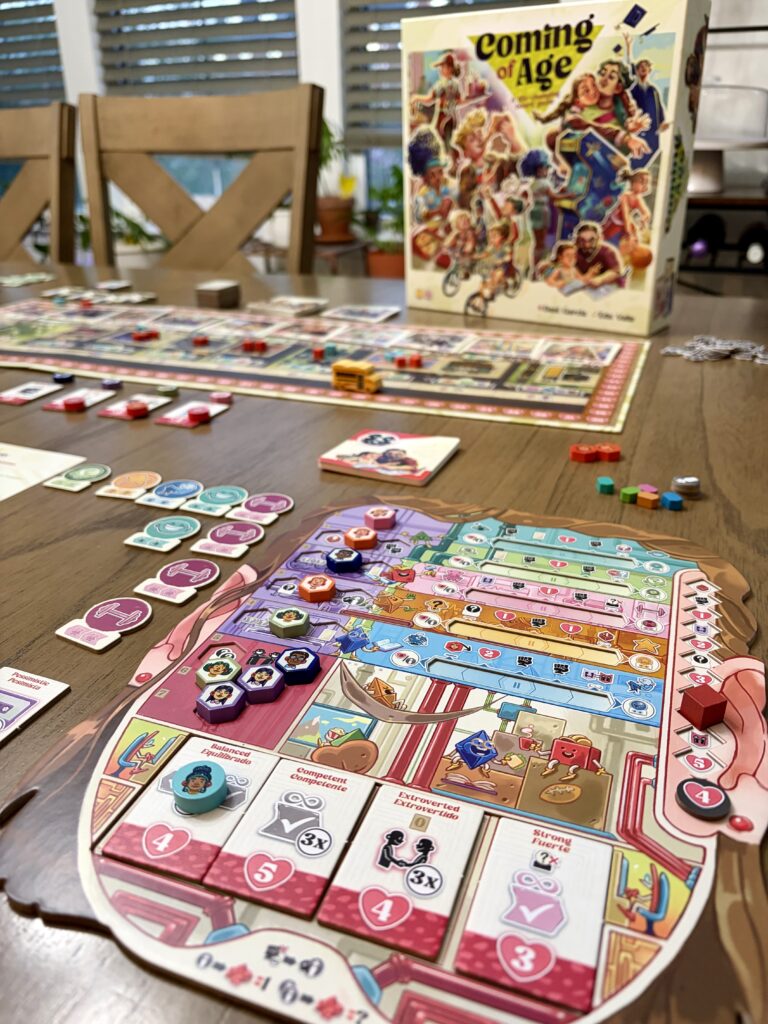
Speaking of theme, this may vary based on the player, but I personally felt that the game felt more mechanical rather than thematic. I’m not saying there isn’t theme in the game, but that often I had to go looking for it. This is another element where I felt like the rulebook could have done a better job of selling the theme. For much of the game, I felt like I was playing a fairly standard euro game, rather than a thematic representation of the journey of a child growing up. Just know that if you’re coming into the game purely for its theme, you may find yourself disappointed like I was.
Lastly, there’s a fair amount of luck in the game that feels out of place. For example, the dice dictates which locations you can visit on your turn, and while there are some ways to mitigate that luck, there are times where you roll a location that doesn’t match with your strategy. In addition, the trait tiles you gain throughout the game are drawn randomly from a stack, so sometimes you may get lucky and can already complete the objective, whereas other times the trait may not align. I also found that some trait and goal tiles were much easier to complete than others, again compounding the randomness. Therefore, with these two elements, I found that the game was occasionally playing me rather than allowing me to have agency over my decisions.
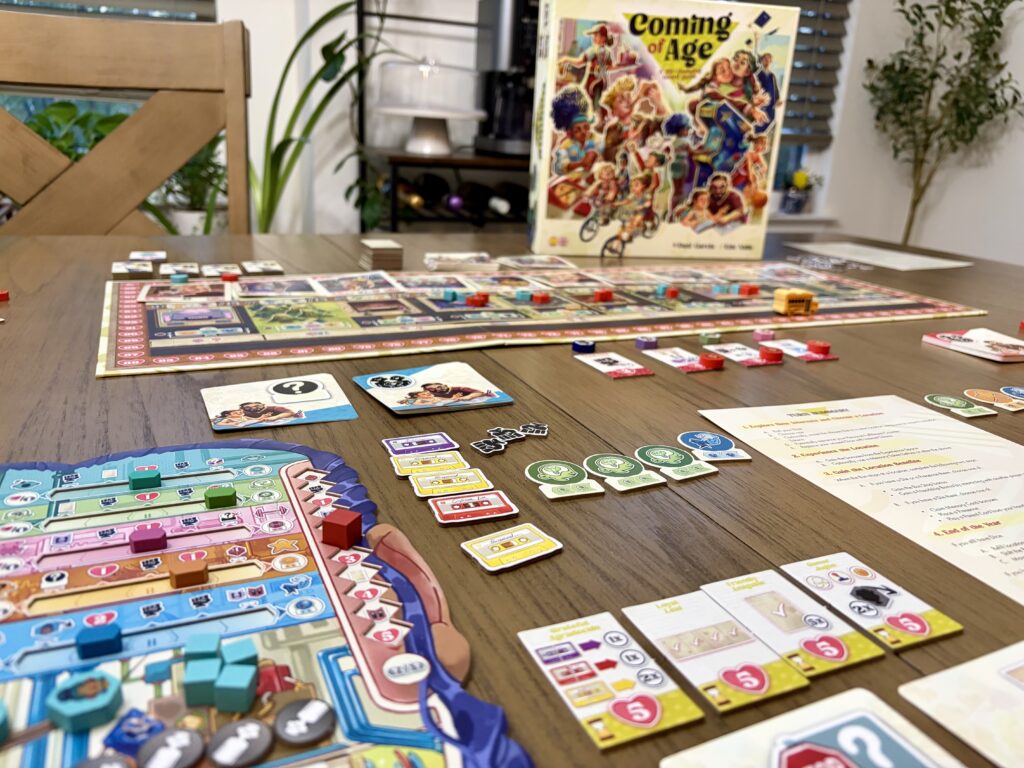
Overall, Coming of Age was a letdown for me. While the unique theme drew me to the game, the gameplay felt more mechanical rather than thematic. Combined with the randomness with the dice and tiles, regretfully, I doubt the game will be staying in the collection. I still recommend those who are at least intrigued by the theme to give it a look – just set your expectations accordingly that this is first and foremost a euro game, rather than something highly thematic.
With that, I’ll wrap up this week’s review! If you’ve played Coming of Age, what are your thoughts on the game, and what are your favorite life-sim games? I’d love to hear your thoughts on any of the games I’ve mentioned or future content suggestions in the comments below. Happy gaming!
If you liked this post and want to be notified when new content is released, then follow me on Instagram @themeepledigest.