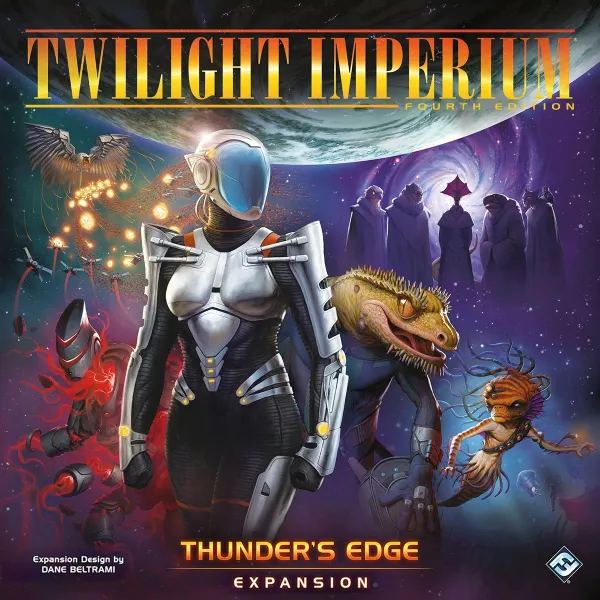
Welcome to this week’s review! This week I’m taking a look at a massive expansion for an already epic space game. So without further ado, let’s jump into it.
Disclosure: A review copy of this game was provided to The Meeple Digest in exchange for an honest, unbiased review. This review is not intended to be an endorsement.
Twilight Imperium: Fourth Edition – Thunder’s Edge
- Designers: Dane Beltrami, Corey Konieczka, Christian T. Peterson
- Publisher: Fantasy Flight Games
- Complexity: Heavy
- Time: 240-480 Minutes
- Players: 3-6
- Main Mechanisms: Action Drafting
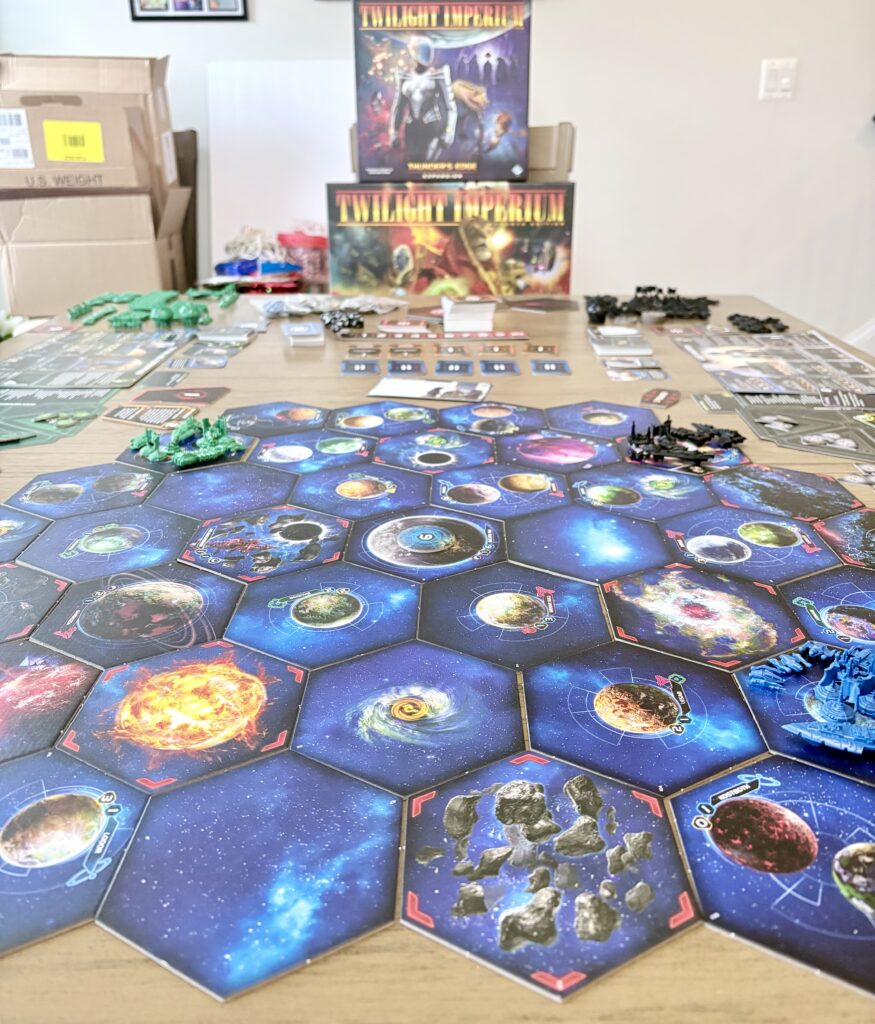
Twilight Imperium: Fourth Edition – Thunder’s Edge is the second expansion for Twilight Imperium: Fourth Edition (TI4). I recently returned to TI4 earlier this year, after six years on the shelf, and given our group’s trepidation going in, we enjoyed the experience far more than we initially expected. With that experience, I was eager to jump into the new expansion, if still a little nervous, given our group was still relatively new to TI4.
Thunder’s Edge adds a significant amount of new content, as evidenced by its large box size. First off, the expansion includes six new factions, one of which was previously available as part of the Twilight Codices, which were print-and-play mini expansions. The new factions add new mechanics that shake up gameplay. For example, The Last Bastion have ways to increase the strength of individual units, while the Crimson Rebellion are able to create their own wormholes. One of the most unique factions are The Firmament/The Obsidian, which allows the player to change factions mid game. I appreciate how each feels significantly different from one another, requiring players to adapt to their faction’s specific strengths and weaknesses each game. Additionally, the new factions vary in terms of complexity, so the new, low-rated complexity factions provide further options for newer players.
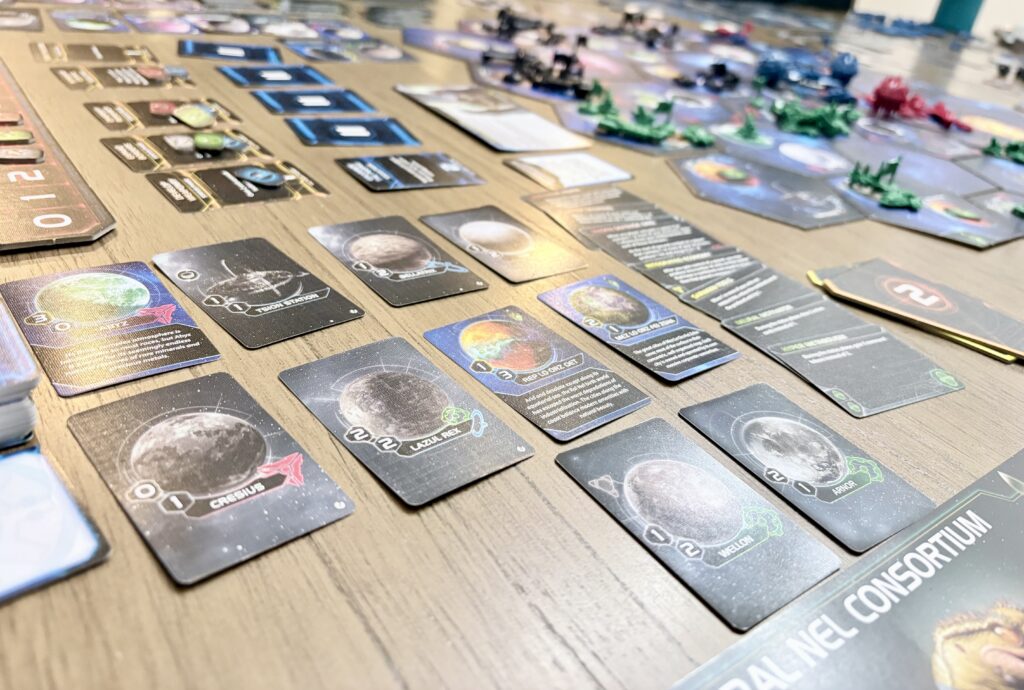
As the name suggests, the expansion also adds a powerful planet to the game – Thunder’s Edge. During the game, players can spend costs, such as resources, influence, etc., in order to search for the planet. Once all costs have been spent combined across all players, then whoever contributed the most gets to decide which system to place the planet. Additionally, when players contribute to the search, they unlock their faction’s specific breakthrough. Each breakthrough provides additional abilities or benefits, and it also links two colors of technology together. When technology colors are linked, players can research technologies using either linked color as prerequisites and for scoring technology-related objectives. For example, if a player wants to research a technology that requires two blue technology prerequisites, but only has two red technologies, they could use their breakthrough that links blue and red technology colors together. Overall, this allows players to more easily research more advanced technologies, provided they focus on the two technology types linked through their faction’s breakthrough.
Whenever a player unlocks their breakthrough, there’s a chance that The Fracture will enter play. The Fracture adds additional powerful systems that are connected through a unique type of wormhole. Additionally, some systems are occupied by neutral units that have to be defeated in order to claim the system. Between Thunder’s Edge and The Fracture, I appreciate how these additional systems shake up the map. Additionally, it can make other systems, besides just Mecatol Rex, be more sought after.

Speaking of powerful systems, Thunder’s Edge adds more system tiles, some of which contain legendary planets. When claiming a legendary planet, the player also receives an ability card specific to that planet. For example, one legendary planet allows the player to build a unit for free at the end of each round, provided the player has researched the advanced unit technology.
In addition to legendary planets, systems can also contain space stations. Space stations are not occupied by ground units, but instead are owned by the player who controls the space area of the system. Space stations increase the value of a player’s commodities and are especially beneficial to factions that specialize in trade. Like Thunder’s Edge and The Fracture, both legendary planets and space stations create more options to consider beyond just the resource and influence value of a planet.
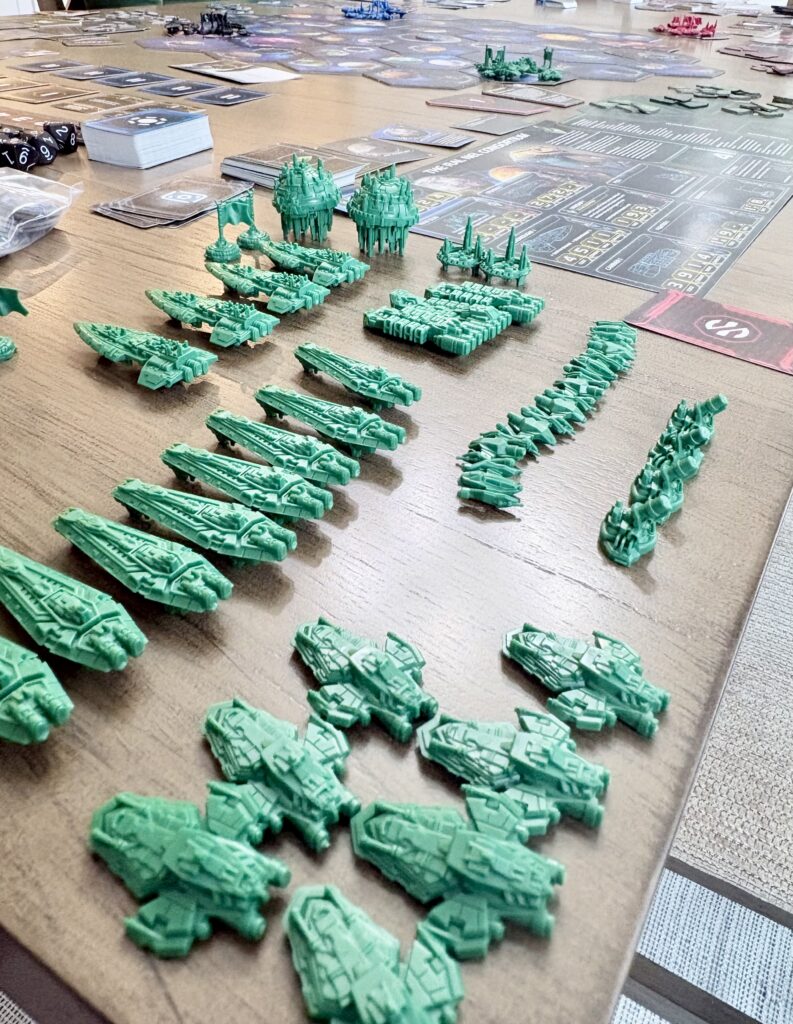
Another addition in the expansion is the introduction of Galactic events which are selected during setup that can change the parameters for the game. For example, one event grants all players the War Sun unit upgrade technology during setup. Another event grants players command tokens each time they activate a system that is part of The Fracture. These vary in terms of complexity, but can have drastic impacts on how that specific game unfolds, further increasing replayability.
There are even more new features that the expansion adds, like the Entropic Scar (a new type of anomaly), dual planets, a coexisting mechanism, and an alliance game variant, but arguably one of the largest additions is the introduction of the Twilight’s Fall game mode. In this variant, players take on the role of a Mahact King faction that can be modified throughout the game. Though a new mechanism called splicing, players can unlock additional abilities and unit upgrades. I have not personally tried this game mode yet, but overall it feels geared towards more experienced TI4 players who want to create highly customized factions. This game mode feels quite unique and interesting, but I might need a few more games of TI4 under my belt before I attempt this.
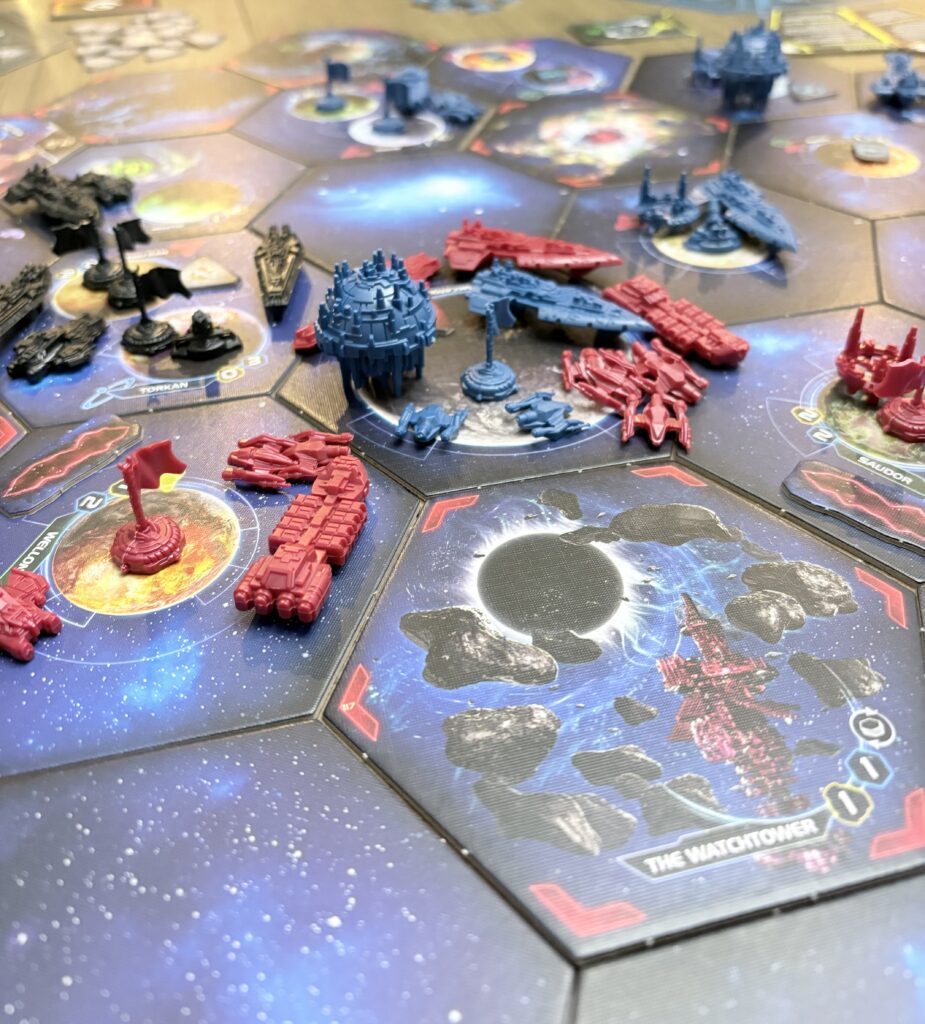
While I don’t personally own the first expansion of TI4 – Prophecy of Kings, from what I can tell, if you’re new to TI4, I would likely recommend Prophecy of Kings first; but if you are a more experienced player looking for even more variety, then I still think Thunder’s Edge is a great expansion to check out. Thunder’s Edge adds a ton of new content, while also adding more replayability through new factions, galactic events, and the Twilight’s Fall game mode. TI4 is still a beast to get to the table, and this expansion only adds to that weight, but there is a significant amount of new content in the box that I’ve enjoyed exploring.
With that, I’ll wrap up this week’s review! If you’ve played Thunder’s Edge, what do you think of the expansion? How would you compare it to Prophecy of Kings? And what are your general thoughts on Twilight Imperium? I’d love to hear your thoughts on any of the games I’ve mentioned or future content suggestions in the comments below. Happy gaming!
If you liked this post and want to be notified when new content is released, then follow me on Instagram @themeepledigest.