
Welcome to this week’s gaming post! It’s challenging to write a “Best Games of 2025” list, as there were many games released last year that I haven’t had a chance to try. Instead, I thought I’d discuss my favorite games I played for the first time last year. Some of these are games that were released in 2025, while others are older games that I tried for the first time. So, without further ado, let’s jump into the list!
Honorable Mention: Scholars of the South Tigris
- Designers: S J Macdonald, Shem Phillips
- Publisher: Garphill Games
- Complexity: Heavy
- Time: 60-90 Minutes
- Players: 1-4
- Main Mechanisms: Dice/Worker Placement

Wayfarers of the South Tigris was among my favorite “new to me” games of 2024, so naturally I was excited to check out the other two games in the South Tigris trilogy last year. Between Inventors and Scholars, I have to give the slight edge to Scholars because of it’s unique theme and use of the color wheel in dice and worker placement. If you’re interested in my thoughts on the South Tigris series, I recommend you check that out here, and all three games are still in my collection.
10. Underwater Cities
- Designer: Vladimir Suchý
- Publisher: Rio Grande Games, Delicious Games
- Complexity: Medium
- Time: 80-150 Minutes
- Players: 1-4
- Main Mechanisms: Worker Placement, Hand Management
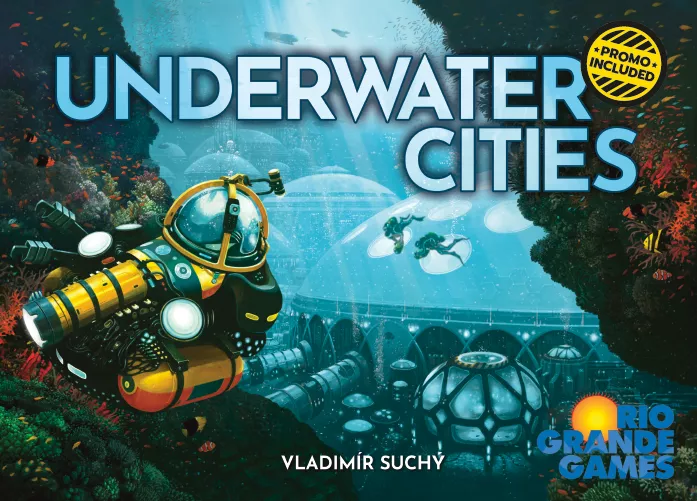
Underwater Cities has been on my radar for quite some time, and I was able to finally dive into both the base game and the first expansion last year. I particularly enjoyed the game’s use of both worker placement and cards, since players are incentivized to match the same color card to the color of the action. In addition, each of the three colors vary in terms of strength, with green cards being the strongest and their matching green colored actions being the weakest. My biggest complaint with the game is that the production value didn’t quite match up to the excellent game play.
9. 7 Wonders Duel
- Designers: Antoine Bauza, Bruno Cathala
- Publisher: Repos Production
- Complexity: Light-Medium
- Time: 30 Minutes
- Players: 2
- Main Mechanisms: Drafting
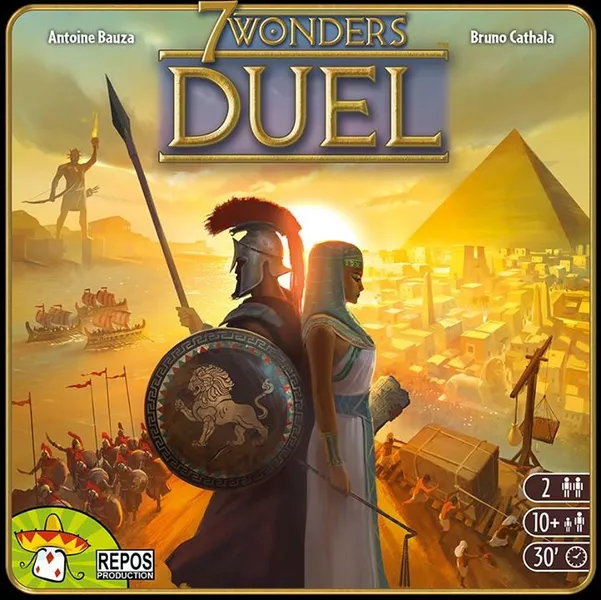
7 Wonders has been a staple in my collection for many years, but unless you use the 2-player variant from the first edition of the game, the game can only be played with 3 or more players. I finally had a chance to try the 2-player only version of the game last year, and I came away impressed. 7 Wonders Duel retains much of what makes 7 Wonders so enjoyable, while introducing a fresh spin on some of the game’s core mechanisms. The game can be a tad mean, but some of that is to be expected when playing a head-to-head game. I don’t tend to play many duel games, but this one is an excellent implementation.
8. Take Time
- Designers: Alexi Piovesan, Julien Prothière
- Publisher: Libellud
- Complexity: Light
- Time: 30 Minutes
- Players: 2-4
- Main Mechanisms: Cooperative
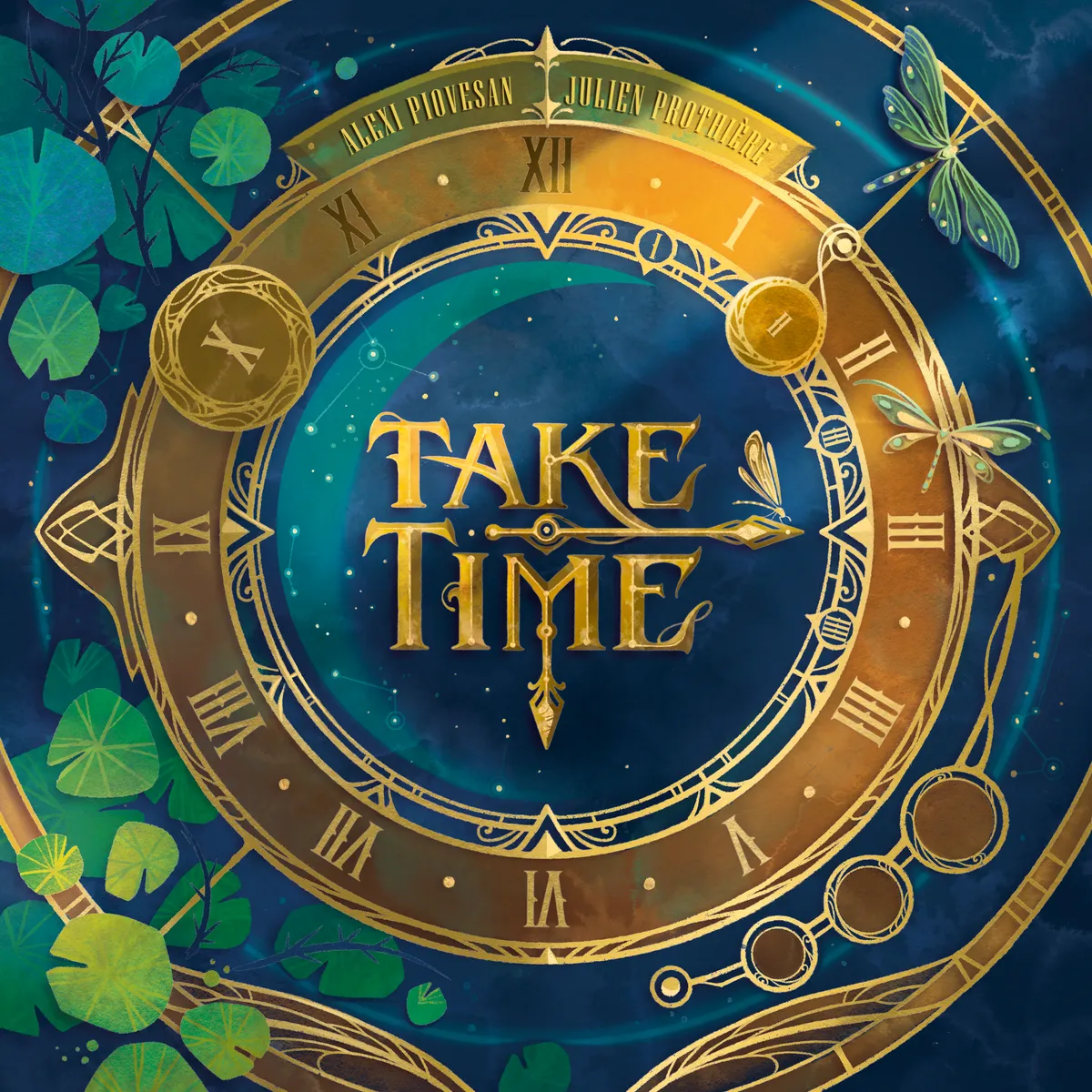
I didn’t know what to expect going into Take Time, but it became one of my most played games last year. The game has a relatively simple premise – play cards around six clock segments, so that the value of each segment is greater to or equal to the last. The challenge is that there’s no communication once players have seen their cards, and the majority of the cards have to be played face down. You might think that the difference between winning and losing boils down to mostly luck, but there’s a fair amount of strategy that goes into deciding where to place cards, and players are able to deduce a fair amount of information without openly communicating. If you’re interested in my full thoughts on the game, you can check them out here, and if you like cooperative games like The Crew, this is an easy recommendation.
7. The Lord of the Rings: The Fellowship of the Ring – Trick-Taking Game
- Designer: Bryan Bornmueller
- Publisher: Office Dog
- Complexity: Light
- Time: 20 Minutes
- Players: 1-4
- Main Mechanisms: Cooperative, Trick-Taking
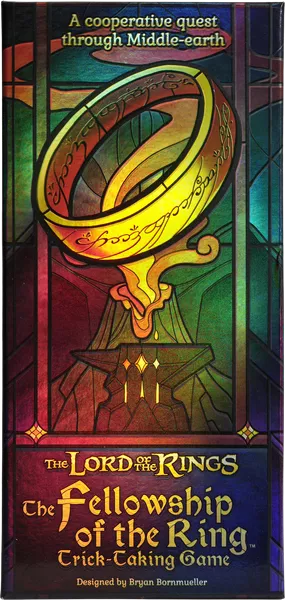
Speaking of The Crew, The Lord of the Rings: The Fellowship of the Ring – Trick-Taking Game takes a lot of inspiration from that cooperative, trick-taking game. The Fellowship of the Ring Trick-Taking Game plays out similarly in that players select characters from The Lord of the Rings, which each has an objective that must be fulfilled in order to win the chapter. For example, one character might have to win the most cards of a specific suit or win the most/fewest tricks. For fans of the original novels, each chapter in this game takes players through events in The Fellowship of the Ring. I had a ton of fun playing through many of the chapters in this game. If you like The Lord of the Rings, or you enjoy The Crew, I’d recommend you check this game out, and if you’re interesting in my full thoughts you can check them out here.
6. Andromeda’s Edge
- Designers: Luke Laurie, Maximus Laurie
- Publishers: Cardboard Alchemy, Lucky Duck Games
- Complexity: Heavy
- Time: 80-160 Minutes
- Players: 2-4
- Main Mechanisms: Worker Placement
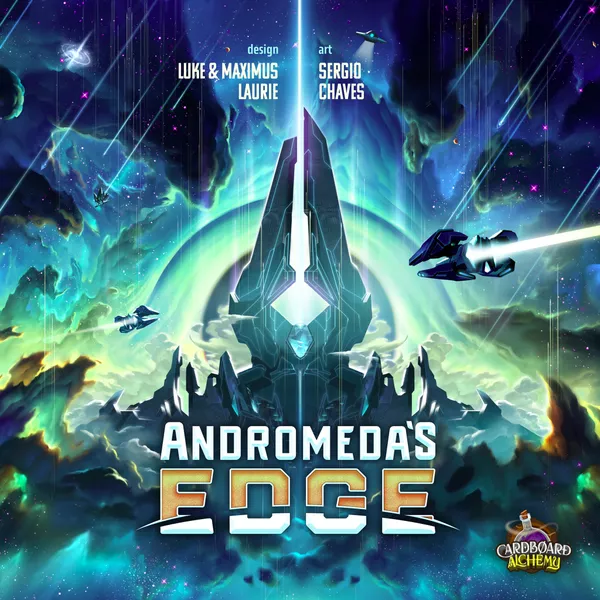
I haven’t played Dwellings of Eldervale, so Andromeda’s Edge was my jumping in point for the series. At first glance, Andromeda’s Edge may appear to be a 4X space game, but in reality, it’s largely a worker-placement euro game. While I have my fair share of issues with the design, mostly that I wish it was more streamlined, I really enjoyed the module engine-building, and the 12 asymmetric player factions add some nice replayability. If you’re interested, you can check out my full thoughts on the game here.
5. River of Gold
- Designer: Keith Piggott
- Publisher: Office Dog
- Complexity: Medium
- Time: 60-90 Minutes
- Players: 2-4
- Main Mechanisms: Dice Rolling, Action Selection
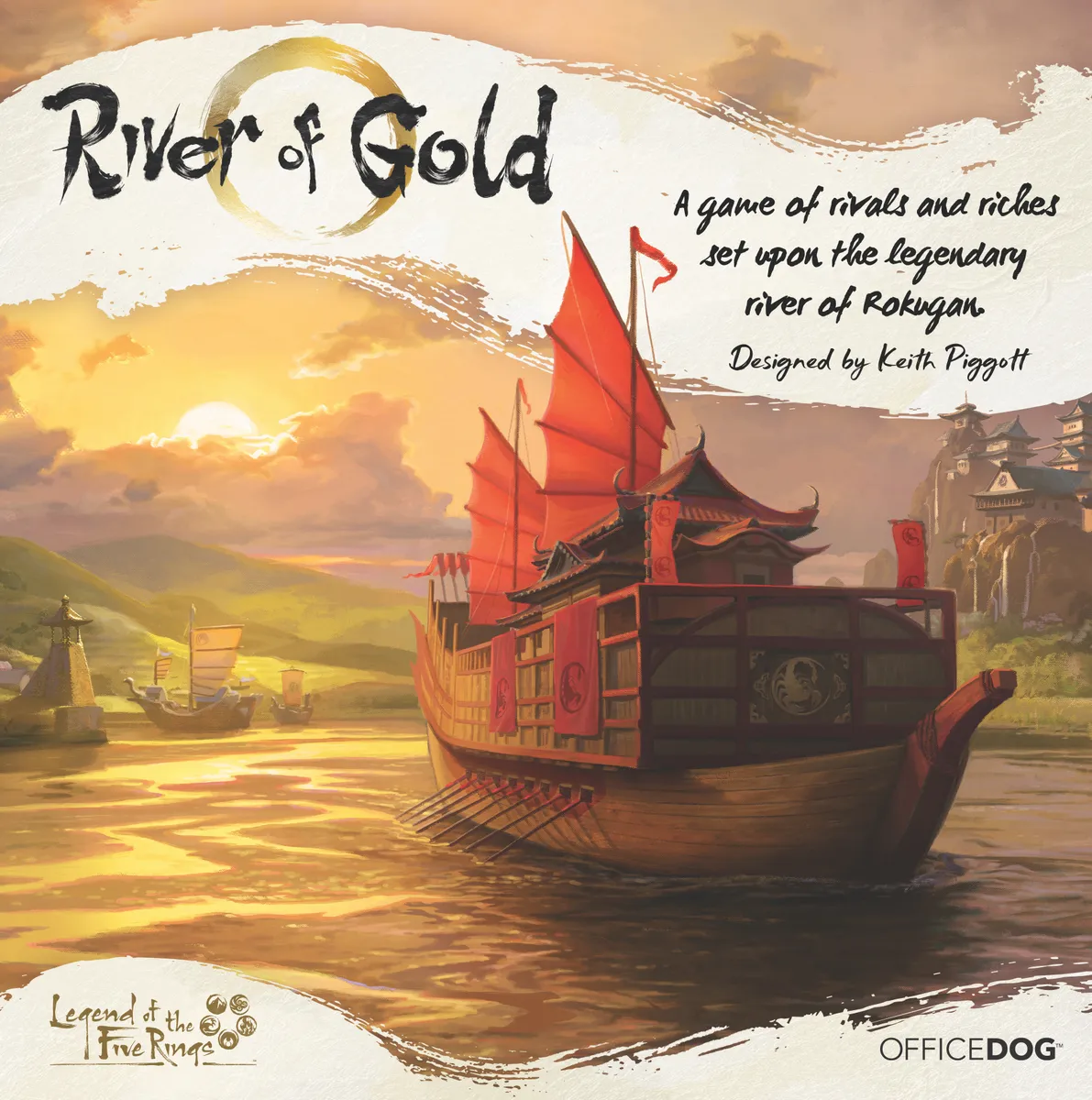
River of Gold was my biggest surprise of 2025. I first played the game at PAX Unplugged on a whim, and it immediately hooked me. While the game is loosely themed around the Legend of the Five Rings, the production and artwork in the game is jaw-droppingly gorgeous. The gameplay is also nothing to sneeze at with streamlined rules and a surprisingly amount of depth. River of Gold is quickly turning into one of my favorite games to recommend to gamers looking for the next step up from games like Ticket to Ride.
4. Darwin’s Journey
- Designers: Simone Luciani, Nestore Mangone
- Publisher: ThunderGryph Games
- Complexity: Heavy
- Time: 60-120 Minutes
- Players: 1-4
- Main Mechanisms: Worker Placement
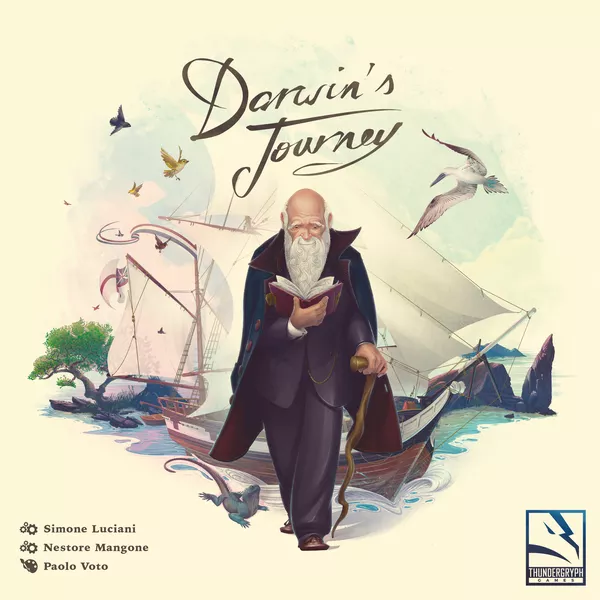
Early in 2025, I reviewed both Darwin’s Journey and the Fireland expansion here and here. While I enjoy many of the mechanisms in this game, the standout is the unique worker progression system where you gradually improve your workers throughout the game, so that they can perform more powerful actions. In addition to improving the value of your worker’s actions, the areas you choose to invest in also determines which type of actions they can take. In addition, when you include the Fireland expansion, which greatly improves the map element, this is an excellent worker-placement game that feels smoother than you might expect for this complex of a game.
3. Bomb Busters
- Designer: Hisashi Hayashi
- Publisher: Pegasus Spiele
- Complexity: Light
- Time: 30 Minutes
- Players: 2-5
- Main Mechanisms: Cooperative, Deduction
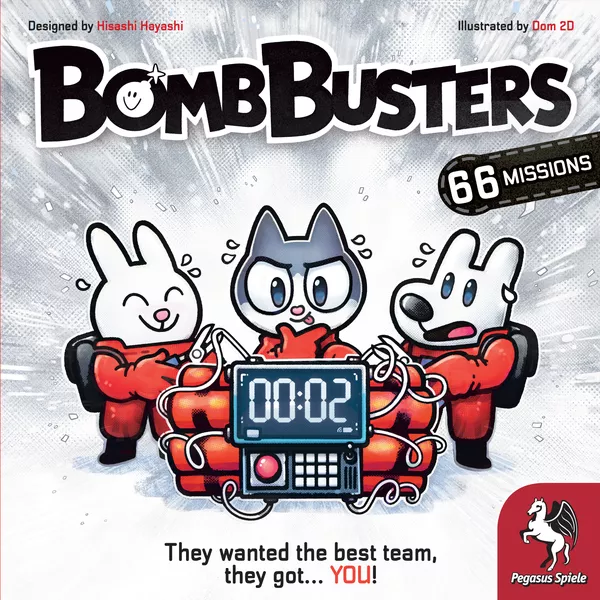
Arguably the most addicting game I played this year, Bomb Busters has that “just one more turn” feeling. This cooperative game has players working together to match tiles from their hands, which symbolize wires on the bomb players are attempting to defuse. The goal is to successfully match all wires of the same number without “cutting” any of the red wires or making too many incorrect matches. There are 66 different missions in the box, and each throw in different wrinkles that players have to adapt to. I won’t spoil any of the missions, but there are some particularly fun ones as you progress. If you don’t trust me, this game also won the 2025 Spiel des Jahres, which is the board gaming award for Game of the Year.
2. Galactic Cruise
- Designers: T.K. King, Dennis Northcott, Koltin Thompson
- Publisher: Kinson Key Games
- Complexity: Medium-Heavy
- Time: 90-150 Minutes
- Players: 1-4
- Main Mechanisms: Worker Placement
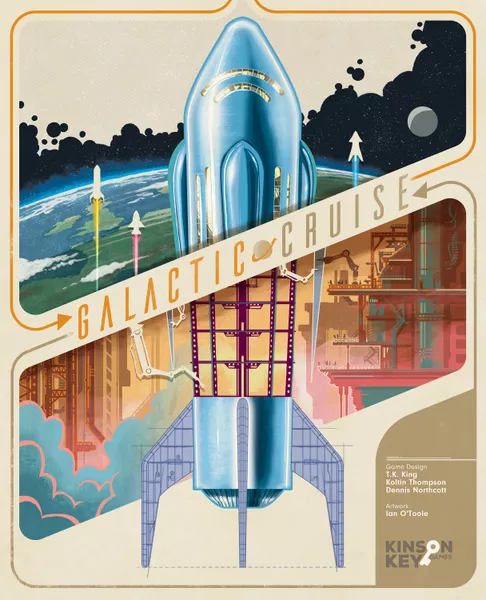
In terms of my favorite game released in 2025, these next two games were shoulders above the rest. Galactic Cruise feels like a Vital Lacerda design, akin to games like Kanban and The Gallerist, without actually being designed by him. The theme of running a cruise company in space is captivating, and the theme is excellently woven into the design. While this isn’t the cheapest game on the market, the production is top notch, and it boasts one of the best player aids I’ve ever seen. Even more impressive is that this is the first game from a new publisher. For more detailed thoughts, you can check them out here.
1. Arydia: The Paths We Dare Tread
- Designers: Cody Miller, Ira Fay
- Publisher: Far Off Games
- Complexity: Medium
- Time: 60-240 Minutes
- Players: 1-4
- Main Mechanisms: Open World, Adventure

While Galactic Cruise was an early frontrunner for my favorite game of the year, after playing Arydia, there wasn’t a question that this open-world, campaign adventure game was the top game that captivated me the most. This was easily my most played game of the year, and I still have so much yet to explore. I love the world-building and character progression, and the combat system reminds me of another one of my favorite adventure games – Sleeping Gods. If you’re looking for more info on the game, you can check out my spoiler-free thoughts on the game here. It’s not the cheapest game out there, but if you’re looking for a game that you can get lost in with easily 100+ hours of content, then I can’t recommend Arydia highly enough.
With that, I’ll wrap my top 10 “New to Me” games I discovered last year! What were your favorite “New to Me” games from last year? It’s always fun to talk about my favorites, but now I’d love to hear your thoughts on any of the games I’ve mentioned or future content suggestions in the comments below! Let me know what your favorite games you discovered last year are. Happy gaming!
If you liked this post and want to be notified when new content is released, then follow me on Instagram @themeepledigest.