
Welcome to this week’s review! This time I’m taking a look back at one of the top-ranked board games in the hobby and one of my favorite games of all time to see if my opinion of the game has changed since it was released five years ago. So, without further ado, let’s jump into it.
Ark Nova
- Designer: Mathias Wigge
- Publisher: Capstone Games
- Complexity: Medium-Heavy
- Time: 90-150 Minutes
- Players: 1-4
- Main Mechanisms: Action Queue
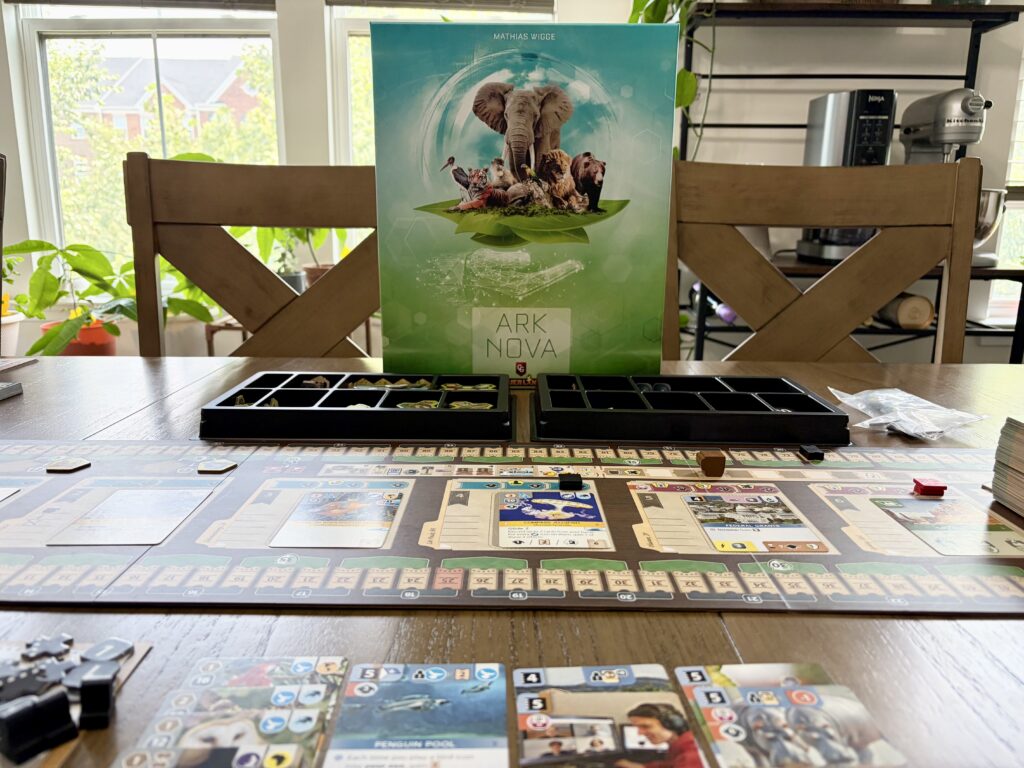
It’s hard to believe that it’s already been five years since Ark Nova was released. It feels recent, yet at the same time, so long ago. At the time of its release, the world was still dealing with the aftermath of the COVID-19 pandemic, and Ark Nova immediately burst onto the scene, scooping up countless game of the year awards. Now, after one major expansion and a spinoff, I wanted to see if my thoughts have changed on the game in the last five years.
If you somehow haven’t heard of Ark Nova, which is difficult to imagine given that it’s currently the second highest rated game on BGG, it’s a medium-heavy euro game themed around managing a zoo. Having grown up playing the old Zoo Tycoon video games, the theme alone was enough to draw me in. I recently listed my Top 10 most thematic games, and while Ark Nova didn’t make the list, the theme still came across fairly strong. Players build animal enclosures, gain sponsorships, and even release animals back into the wild to score conservation points. And one of my favorite things about the game is discovering all of the different animals across the multitude of cards.
Moving onto the actual mechanics of the game, I especially love the action-selection system. I’ve heard it referred to as the typewriter mechanic because each of your five action cards have a power between one and five, and after using an action, that action card is moved back to the one slot, sliding all of the other cards forward. This creates an interesting timing puzzle of figuring out when to trigger each of the different actions because waiting until the action card is in the four or five slots will result in stronger actions. The only other game that I’m aware of that uses a similar action-selection system is Civilization: A New Dawn, and I’d love to see this type of mechanism used in more games.
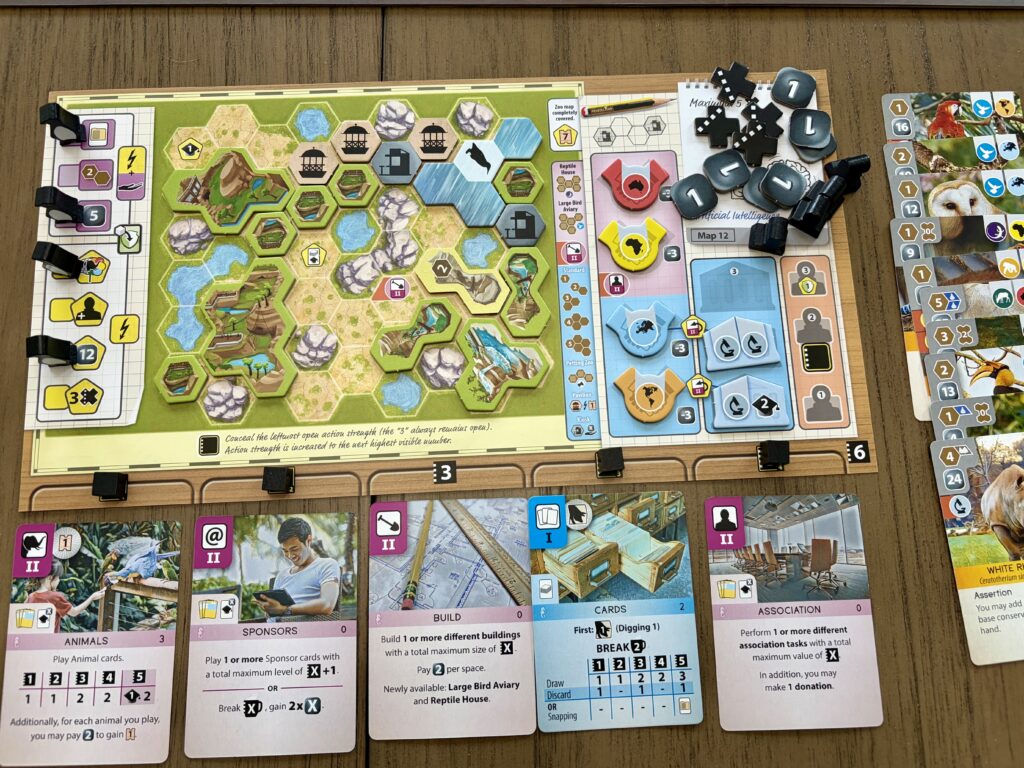
Next, I find it interesting that the end-game is triggered by two crossing player tracks. Effectively, players are racing to be the first to have their two score markers cross (each start at different ends of the board). Another game that uses a similar mechanism is Rajas of the Ganges. In both games, players have to decide which tracks to prioritize, and in Ark Nova, scoring conservation points offers some really powerful rewards early on, whereas increasing your appeal results in more income. These two crossing tracks pave the way for exciting tension especially when someone is close to triggering the end of the game. The one downside to this is that it can be challenging for players, particularly newcomers, to come from behind and still win. If someone falls behind early, it’s unlikely they’ll be able to make up the ground. This can result in an anticlimactic ending if someone runs away with the game.
I’ve mentioned in the past that I particularly enjoy games that reward a lot of tactical decision-making. In Ark Nova, while you can form strategies around certain cards or focus in different areas, there is still an element of card-draw that forces players to adapt. For example, one of the first decisions in the game is deciding which four cards of your starting eight to keep. Ideally players should try to align their starting cards to at least one of the base conservation projects, but they’ll still need to make some tradeoffs. This relates to another interesting mechanism, which is the relatively small hand limit that occurs at certain breaks in the game. While players are not drawing and discarding cards as often as Earth, Ark Nova still offers a number of different ways to cycle cards, which forces players to make some tough decisions on which cards to prioritize. While I can understand that some gamers may struggle with being forced to pivot so often based on the cards, I personally appreciate all of these small decisions.
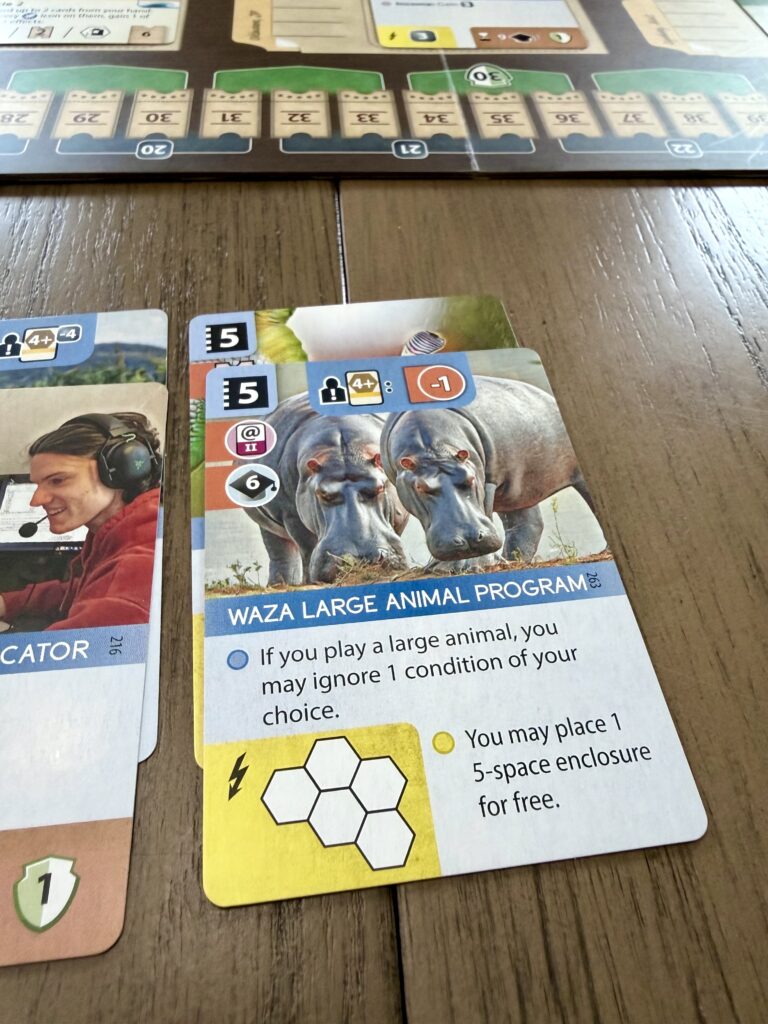
This leads into my next point, which is that the game is extremely replayable. Whether it’s deciding which action cards to upgrade first, or what type of animals to focus on, I don’t think I’ve had two games of Ark Nova play out the same. In a recent game, I had only played a couple of animals into my zoo by around the halfway point in the game by focusing more on sponsorships and other ways to score points.
The replayability in the game is further strengthened by the borderline essential expansion – Marine Worlds, which adds a new animal type called reef dwellers, along with a bunch of variations of the action cards that players draft during setup. There are some really cool action card twists in the expansion and since players only have two of them each game, this leads to even more variety and unique combinations.
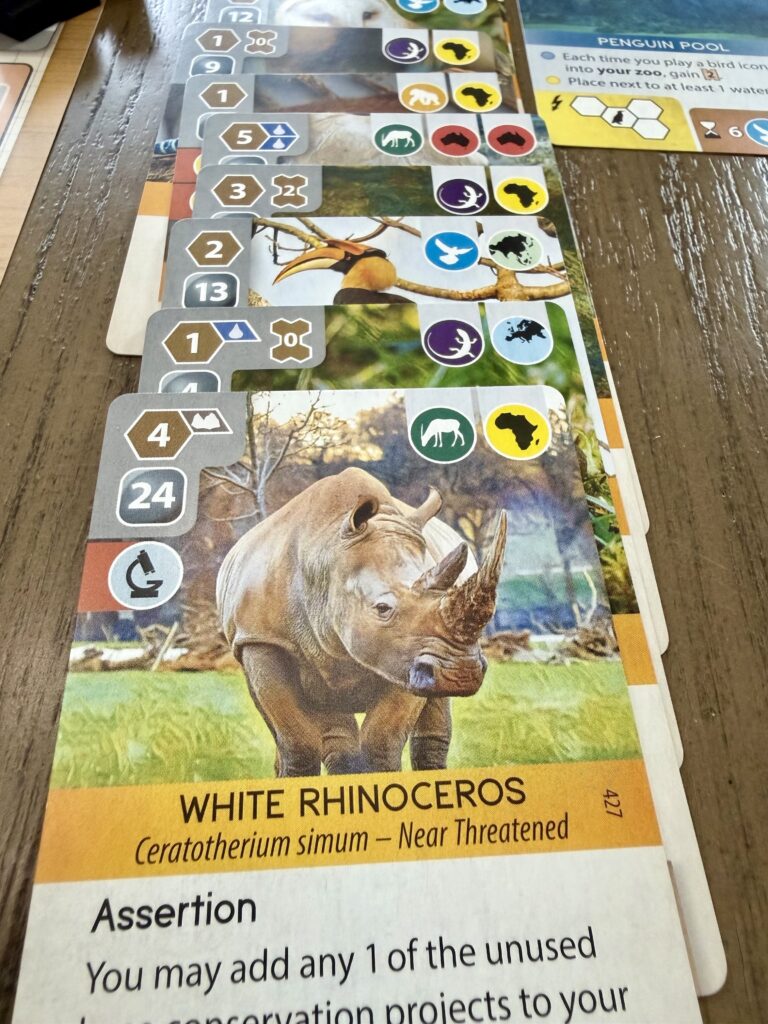
I also recently picked up the small zoo map packs that add even more asymmetric player boards. While I always felt that the powers of the zoo maps in the base game were more situational, the ones in the map packs push the asymmetry even further. There are some really unique ones like Map 12, which can permanently adjust the base strength of your actions, as well as Map 13, which divides the zoo map into four sections that award income and bonuses when sections are completed. I’m excited to dive into more of these maps, which further increase the replayability of the game.
Moving onto a couple of slight negatives. First off, I mentioned needing to pivot strategies based on the cards you draw, and this contributes to an element of luck of the draw. For example, if I’m looking for one more icon to satisfy a conservation project, but that type of card never appears, then I’m out luck. I do appreciate that the Marine Worlds expansion added more ways to cycle, as well as hunt for certain types of cards, but there is still an element of luck in the game. I could certainly see this turning away certain types of gamers that like a lot of forward planning with minimal to no luck. Lastly, the game has a tendency to run long, which is why I prefer to play it with less than the full four players.
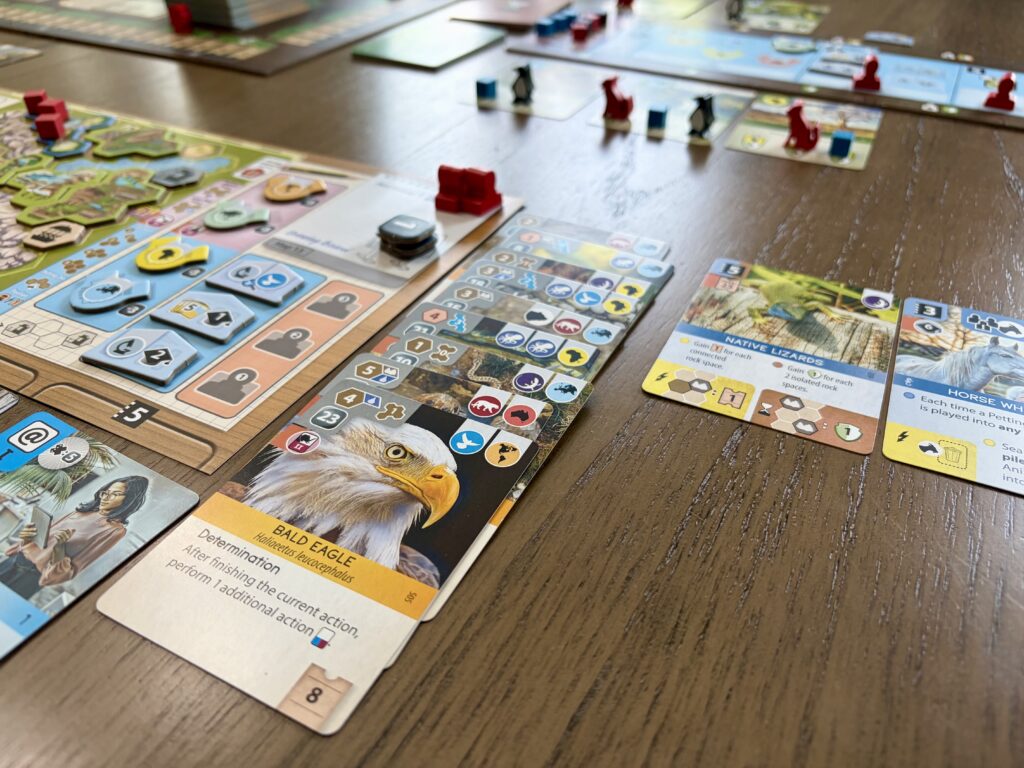
Overall, I can confidently say I’m still enjoying Ark Nova just as much as I did when I first picked it up five years ago. In addition, the excellent Marine World expansion, as well as the zoo map packs, add even more depth and replayability to the game. The game can certainly run a bit long, and gamers have to accept a certain amount of luck of the draw with these types of games. However, I still really enjoy the puzzle of figuring out how to manage the five actions, and it’s a joy seeing my personal zoo come together. If Ark Nova is still in your wish list to try, I definitely recommend checking it out.
With that, I’ll wrap up this week’s review! Since it’s been a few years since Ark Nova was released, have your opinions on the game changed at all? Let me know in the comments below. Happy gaming!
If you liked this post and want to be notified when new content is released, then follow me on Instagram @themeepledigest.