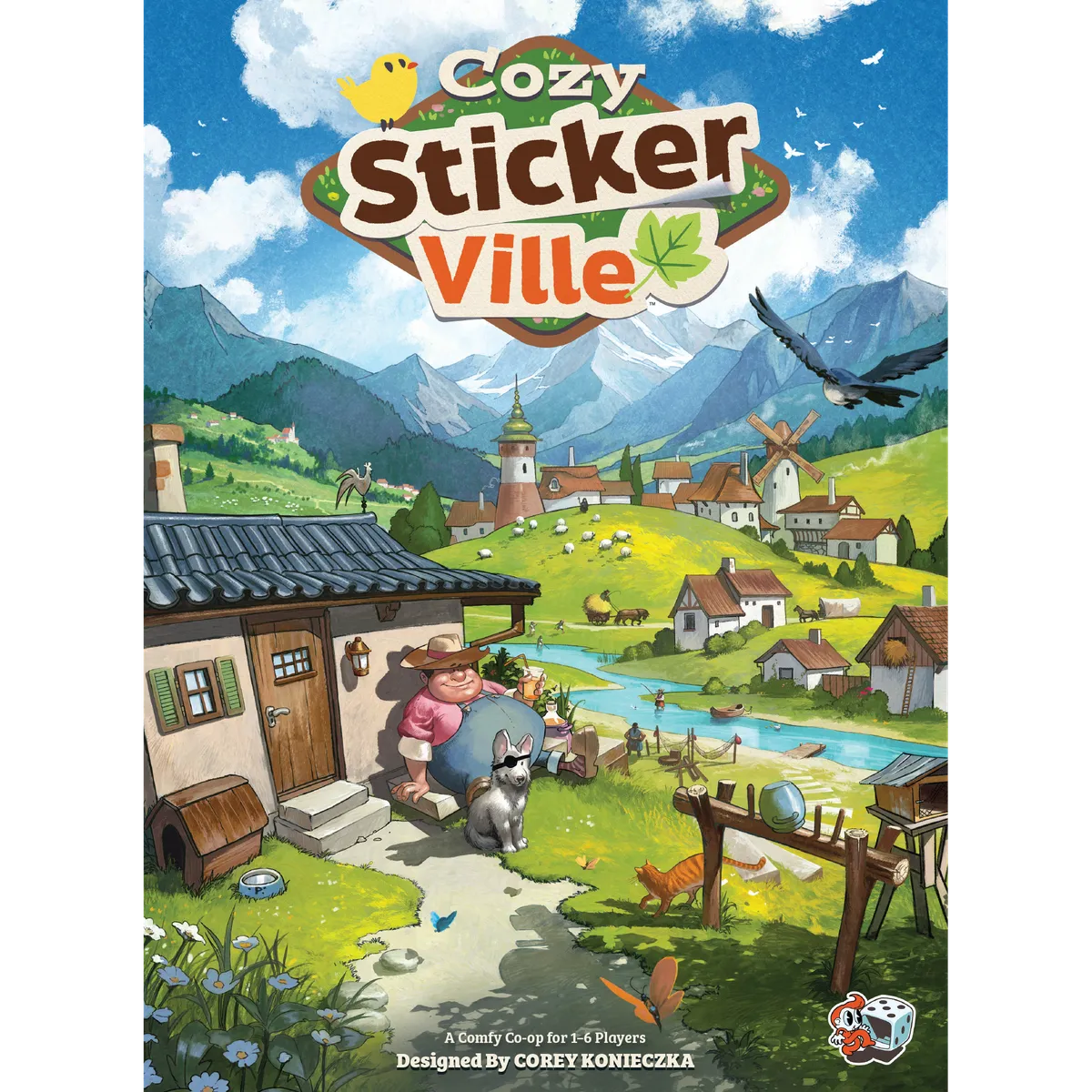
Welcome to this week’s review! This time I’m taking a look at a recent cozy legacy game that feels unlike anything I’ve played before. So, without further ado, let’s jump into it.
Disclosure: A review copy of this game was provided to The Meeple Digest in exchange for an honest, unbiased review. This review is not intended to be an endorsement.
Cozy Stickerville
- Designer: Corey Konieczka
- Publisher: Unexpected Games
- Complexity: Light
- Time: 30 Minutes
- Players: 1-6
- Main Mechanisms: Legacy, Cooperative, Narrative Choice
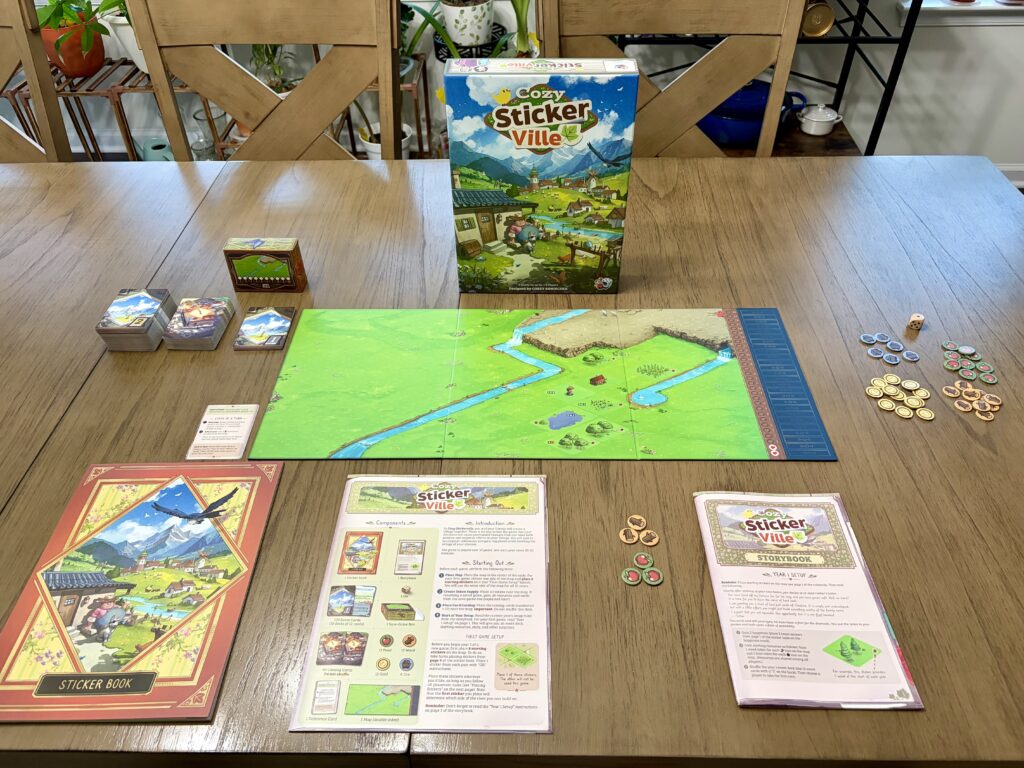
I’ll admit that I only gave Cozy Stickerville a cursory glance the first time I came across it and didn’t think much of it. A cooperative legacy game about placing stickers on a map with an art style similar to games like FarmVille? As someone who primarily plays medium to heavy weight euro games, this game felt as far from my norm as you can go. However, I recently mentioned that this blog has allowed me to step outside my comfort zone and find games that I might not initially gravitate to, and considering how popular this game has been since its release earlier this year, what better time to give it a look? Fun fact, this game was recently nominated for the 2026 Spiel des Jahres award, which is the board game equivalent to game of the year.
Cozy Stickerville is a legacy-style game played over the course of ten in-game years that each take roughly 30 minutes to complete. With legacy games, there is an element of permanence and here players are placing stickers onto a map board as their town slowly expands throughout the ten years. Each year has their own event deck of 12 cards, and each turn, the active player flips over the next event card, which is often resolved by choosing one of two choices. These often result in an outcome by way of placing a sticker, gaining a card, and/or gaining/losing resources. After resolving the event, the active player performs one action, which is typically done by interacting with either a location or person sticker on the map or by interacting with what they’ve gained. Once the active player chooses an action, they either read a story section from a small booklet, gain/discard a card, and/or place a sticker. After all 12 event cards for the year have been revealed, the year ends and players can continue playing until they’ve completed all ten years. You can also easily save between years, so you don’t need to play all ten years in a single session. Additionally, once players finish all ten years, they can flip over the map board and play through it again, so that they can make different choices the second time through (more on this in a bit).
My favorite part of the game by far is the tactile joy of placing the stickers on the map. There’s a noticeable sense of progression, and I had fun seeing my unique map come together physically on the board. There are only a few placement restrictions, so everyone’s town is bound to look different after they’ve completed their playthrough.
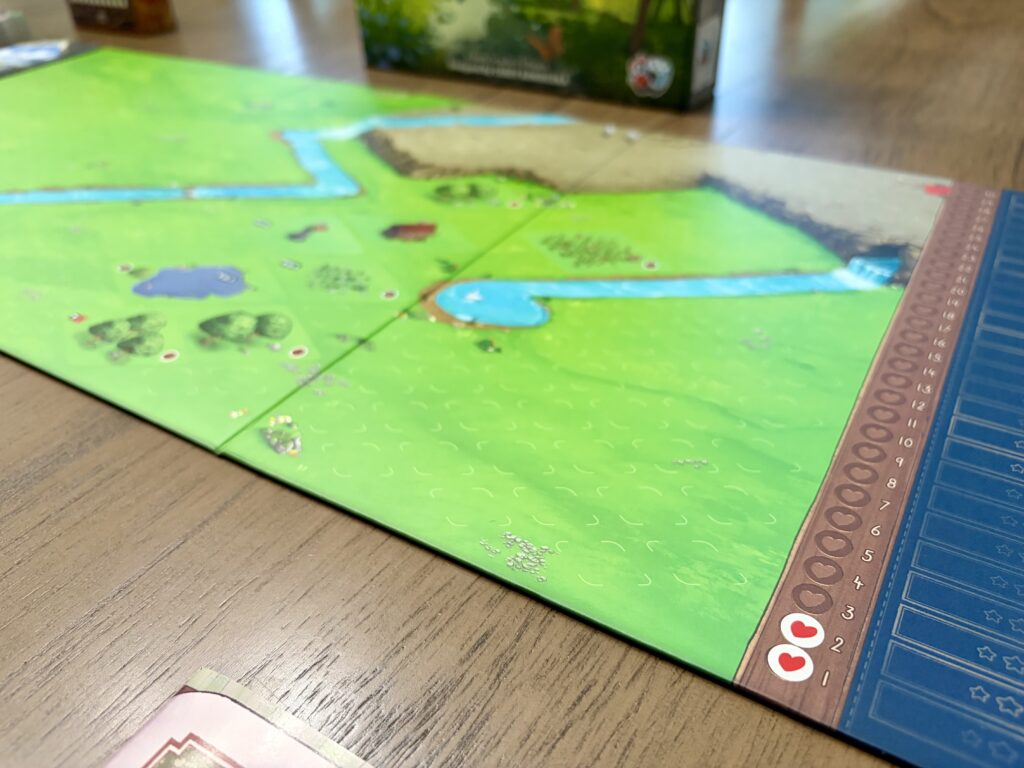
The downside here is that the game has a finite number of plays. While I appreciate that you can play through the story a second time and make different choices, you are limited to a maximum of 20 games/years, which equals roughly 10-15 hours of playtime. Even the second time through, since there are a limited number of stickers, you won’t be able to make some of the same choices again. While this game is targeted towards a much different audience, it doesn’t have the same replayability of other narrative-focused games like Sleeping Gods, Vantage, or Arydia. The main selling point of this game is that it’s much more approachable. There were very few rules, and I was able to jump in almost immediately after unboxing.
It might be a bit “on the nose” to call this game cozy, but I think that’s a fairly accurate description. The game is largely story-focused, and the stories themselves are light in nature. For example, you might have to make a choice between inviting two different people to move to your town. While you gain and spend resources to generally place stickers, there are no real consequences in the game. And there’s no real winning or losing other than a few different endings depending on the number and types of long-term goals you were able to complete.
While the stories are very light, I did appreciate the connected elements. For example, a decision earlier in the game might impact a future outcome that you might not be aware of at the time. I do wish the designers had pushed this element a little further though as most choices didn’t have a huge difference either way. I also felt that the ending to some stories fell a bit flat. Some elements in the game might require players to take multiple actions at the same location before reaching the ending, but often the ending was just some extra resources and another sticker to place. One particular letdown was a specific character who showed up in one of the first few years cropped up a few times in later years which kept me waiting for a big moment, but when their story came to an end, there wasn’t much to it. While this is still a narrative game and the writing is serviceable, the stories are not the main selling point.
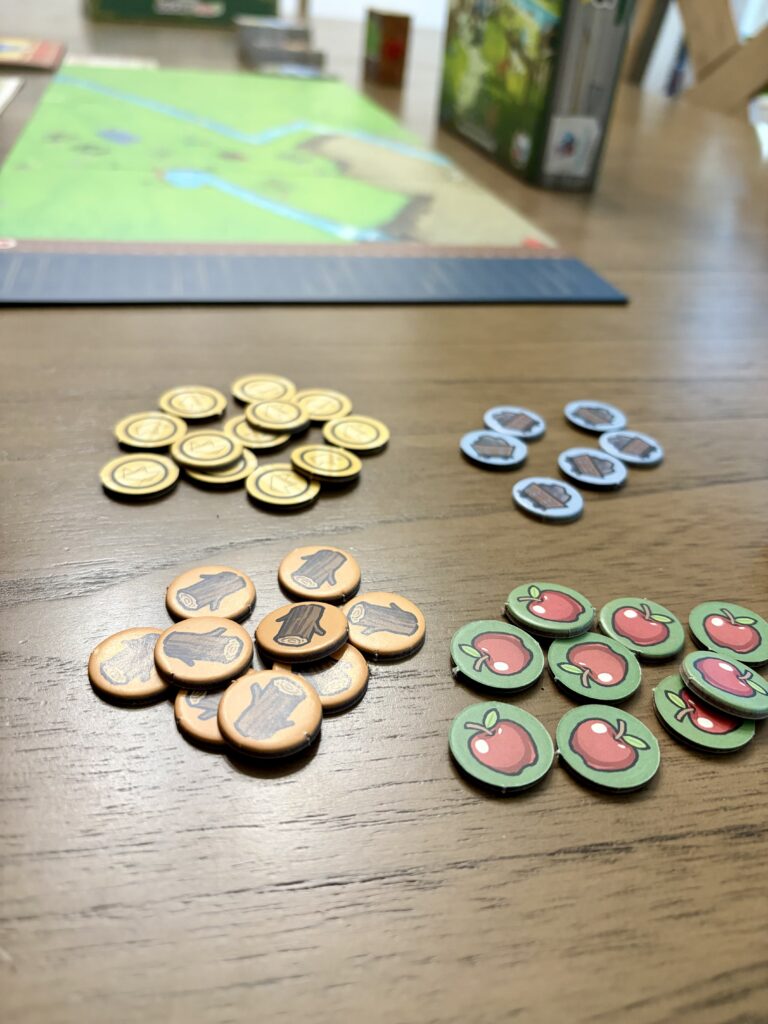
While the box says the game can be played from one to six players, I personally played through the entire first ten years solo. When I revisit the game in the future to play through the other side, I may play through it with my wife, but there’s no advantage of playing the game multiplayer other than for the shared experience. That said, I could see partners or families enjoying this game together.
Finally, there are moments in the game where you have to roll a six-sided die that determine certain outcomes. While I understand the game is meant to be light, this element of randomness felt frustrating at times, and there were moments where it felt like the die took away my sense of choice. There are some moments where you can modify your die roll by spending resources, but sometimes a poor roll can feel very punishing.
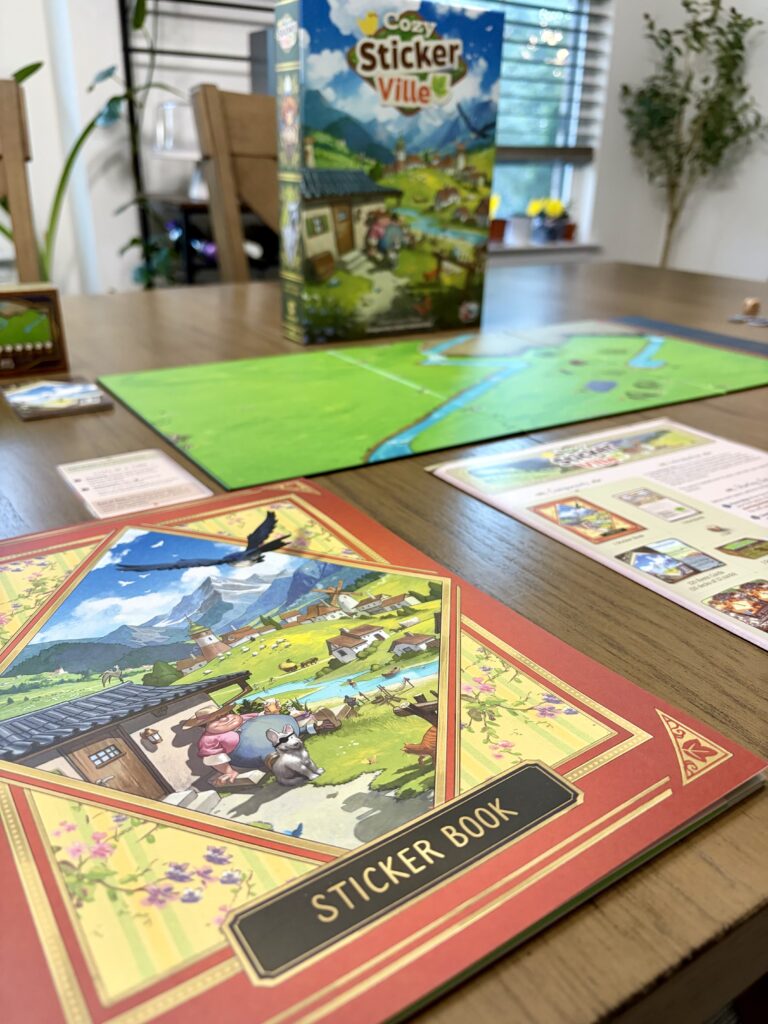
Overall, I have enjoyed my time with Cozy Stickerville, and I’ll likely revisit in the future to play through the second ten years. However, the low replayability makes me question what I’d do with the game after that second play. I imagine it will be difficult for me to throw it away when I’m done, but I also don’t know that it makes sense for it to remain on my shelf if I can’t play through it again. Part of me wishes that there was a way to make the game fully resettable, but given the sheer number and different types of stickers, this probably isn’t feasible. I’d still recommend checking the game out, just know that your buying decision will likely depend on your opinions on legacy style games.
With that, I’ll wrap up this week’s review! If you’ve played Cozy Stickerville, I’d love to hear your thoughts on the game. And if you haven’t, do you plan on checking out the game? Happy gaming!
If you liked this post and want to be notified when new content is released, then follow me on Instagram @themeepledigest.